Unpublished editorial draft awaiting owner review.
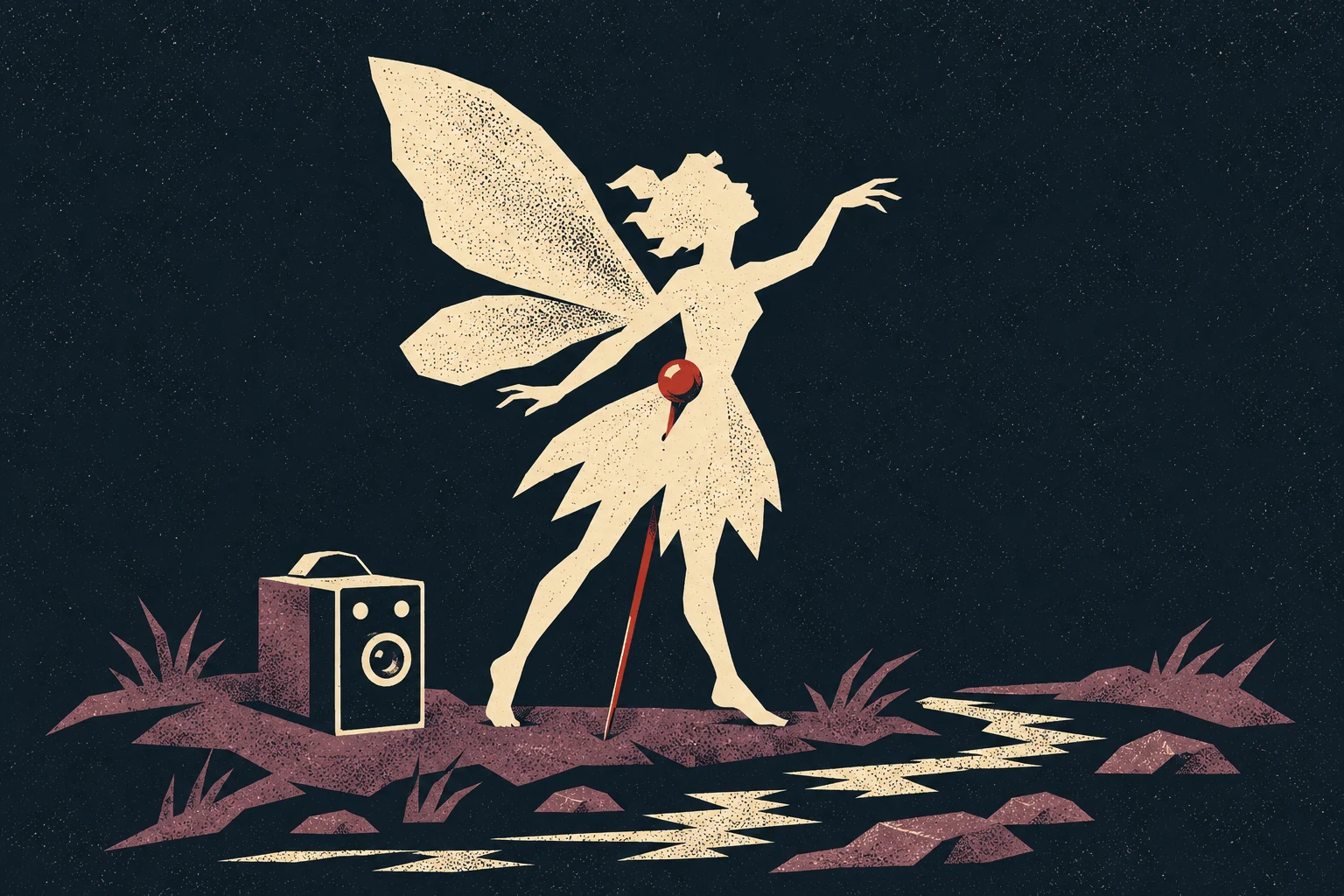
A camera borrowed in Yorkshire produced a photograph of a girl beside dancing fairies, and the creator of Sherlock Holmes helped make it famous; the explanation lay among paper drawings, hatpins and assumptions about what children could do.
A camera beside the beck
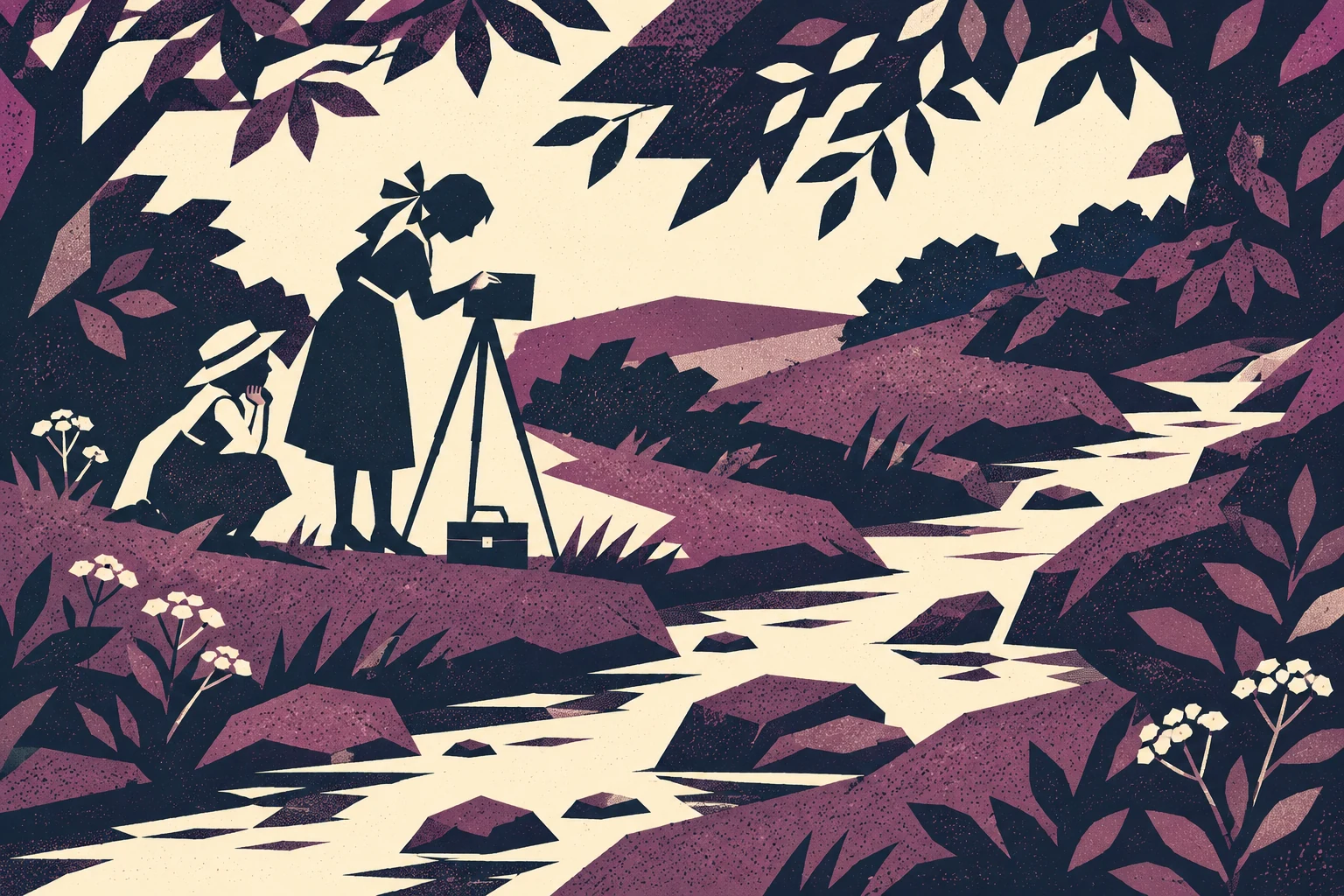
In July 1917, Elsie Wright photographed her younger cousin Frances Griffiths beside the stream behind the Wright family home at Cottingley, near Bradford. Frances looked towards the camera. Across the foreground, little winged figures appeared to dance, one carrying pipes. A waterfall and rocks completed the setting. The picture would eventually be presented as evidence of a form of life that ordinary eyes usually missed.1
It was a real place and a real photographic exposure. The apparent fairies were drawings, arranged before the lens. That distinction explains much of what followed: a negative could faithfully record the scene in front of a camera while the scene itself was a performance. More than sixty years passed before the cousins publicly explained the method, by which time their pictures had travelled far beyond a family garden.4
The first camera belonged to Elsie’s father, Arthur Wright. It was a Midg quarter-plate camera, using sensitised glass plates rather than the film rolls familiar from later family photography. Conan Doyle’s published account says Wright initially resisted lending it, then supplied one plate. The girls returned after a short absence and asked him to develop their photograph. He did so, producing the image that eventually reached the wider public.1
A second photograph followed in September 1917, this time taken by Frances. It showed Elsie beside a figure described as a gnome. The two cousins had exchanged positions behind and before the camera, giving the future investigation two pictures and two photographers. Their apparent visitors were different, but the essential claim was the same: beings encountered beside the beck had become visible on photographic plates.1
The later publicity introduced another complication. In the accounts readers encountered, Frances could become Alice, Elsie could become Iris, and the family could appear under the name Carpenter. The substitutions were intended to protect identities. They did not designate additional children or a second location. When the published captions shift between names, they are still describing the same cousins and the same small group of photographs.1
For the future advocates, the setting mattered almost as much as the pictures. A modest family home, a father with a camera and an apparently unexceptional stretch of Yorkshire stream suggested an occurrence far from the apparatus of a professional medium. Gardner’s later account emphasised the short time the girls had been away. Each ordinary detail became an argument that an extraordinary deception would have been impractical.1
Yet little was established about the decisive interval. An adult could lend a camera, develop a plate and truthfully describe both actions without seeing what had been placed in front of the lens. No certainty about the father’s honesty could fill that gap. The photographs preserved a view of the beck; they did not preserve an independent account of how its foreground had been prepared.
The cousins’ pictures acquired their international audience through adults who believed they had found something much larger than a family curiosity. Edward Gardner, a leading member of the Theosophical Society, became their investigator and advocate. Arthur Conan Doyle supplied the most famous name. He had written Sherlock Holmes, but the claim he now wished to examine belonged to a different body of work: his public campaign for a world beyond conventional material explanations.1
How the pictures reached Doyle
Conan Doyle’s own chronology begins in May 1920. He heard about alleged fairy photographs through the editor of the spiritualist journal Light, then followed a chain of contacts. At first, some of the people discussing the pictures had not actually seen them. Letters and introductions brought him eventually to Gardner and to the images themselves. His book preserves that progression, allowing the reader to watch an intriguing report acquire authority.1
Gardner’s sister described his interest in fairies and his contact with the family. Another correspondent, E. Blomfield, sent the two pictures in June. She also explained that Gardner had plans for their use and did not yet want copies circulated freely. The photographs were already objects that could be enlarged, shown, reproduced and copyrighted, rather than something visible only during an elusive encounter in a woodland glen.1
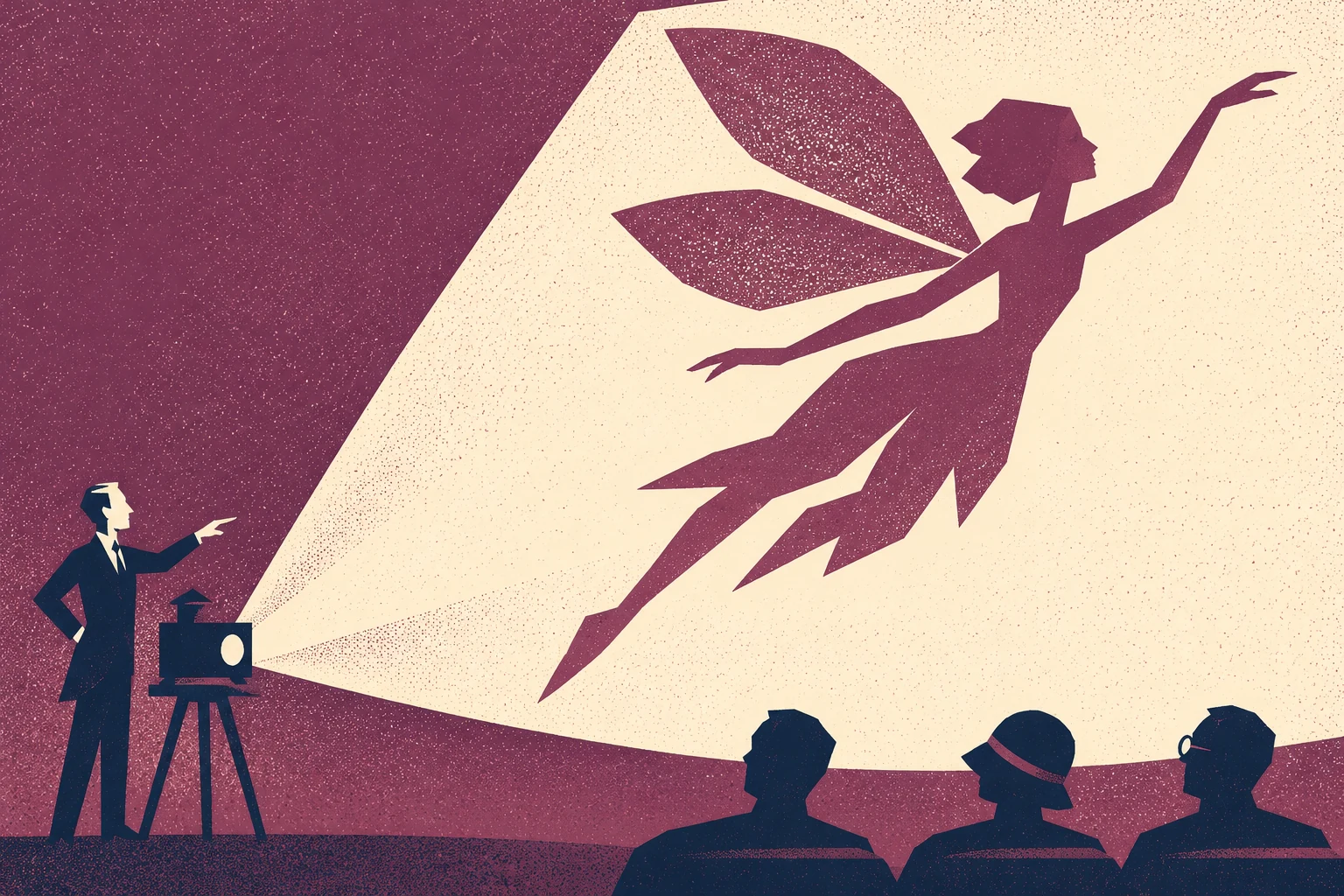
This mattered because a photographic claim could travel independently of its makers. Viewers could scrutinise a print without meeting the girls. An expert could inspect a negative in London. A lecturer could project the figures on a screen. The very portability that appeared to make the evidence unusually accessible also separated each new audience from the original exposure, where the most important questions had to be asked.
Conan Doyle did not simply print the first account that reached him. He sought opinions, corresponded about tests and supported a visit to Yorkshire. His weakness was more specific than a complete absence of inquiry. As his correspondence shows, he gave increasing weight to technical assurances and favourable impressions of character, although neither could supply direct observation of the scenes being photographed.1
Gardner went to Cottingley in July 1920. He met the family, identified the sites and examined details that had troubled people studying the prints. An apparently peculiar hand could be compared with Elsie’s actual hand. The bank and vegetation could be located. The landscape matched. For Gardner, finding ordinary explanations for those objections made the extraordinary central claim seem increasingly secure.1
His report also recorded descriptions of the beings’ colours and behaviour. The fairies were said to be pale pink, green or mauve; the gnome wore contrasting clothes and carried pipes. These descriptions were not measurements produced by the plates. They were additional testimony, offered by the same people whose claim was under examination. Their detail could make the account more vivid without making it independently corroborated.1
Gardner concluded that the family’s honesty and simplicity were persuasive. Conan Doyle accepted that assessment. A letter from Arthur Wright, reproduced in the book and dated 12 July 1920, thanked the author for a book sent to Elsie and explained that the family had been away when it arrived. Such correspondence established a genuine relationship. It did not establish what the camera had seen.1
The first public presentation appeared in the Christmas 1920 issue of the Strand Magazine, under Conan Doyle’s name. A second article followed in March 1921, and the book The Coming of the Fairies in 1922. These were not obscure private claims. The photographs had entered a magazine audience already familiar with the author’s fictional detective, carrying an association with investigation that made the reversal especially memorable.17
What the experts actually said
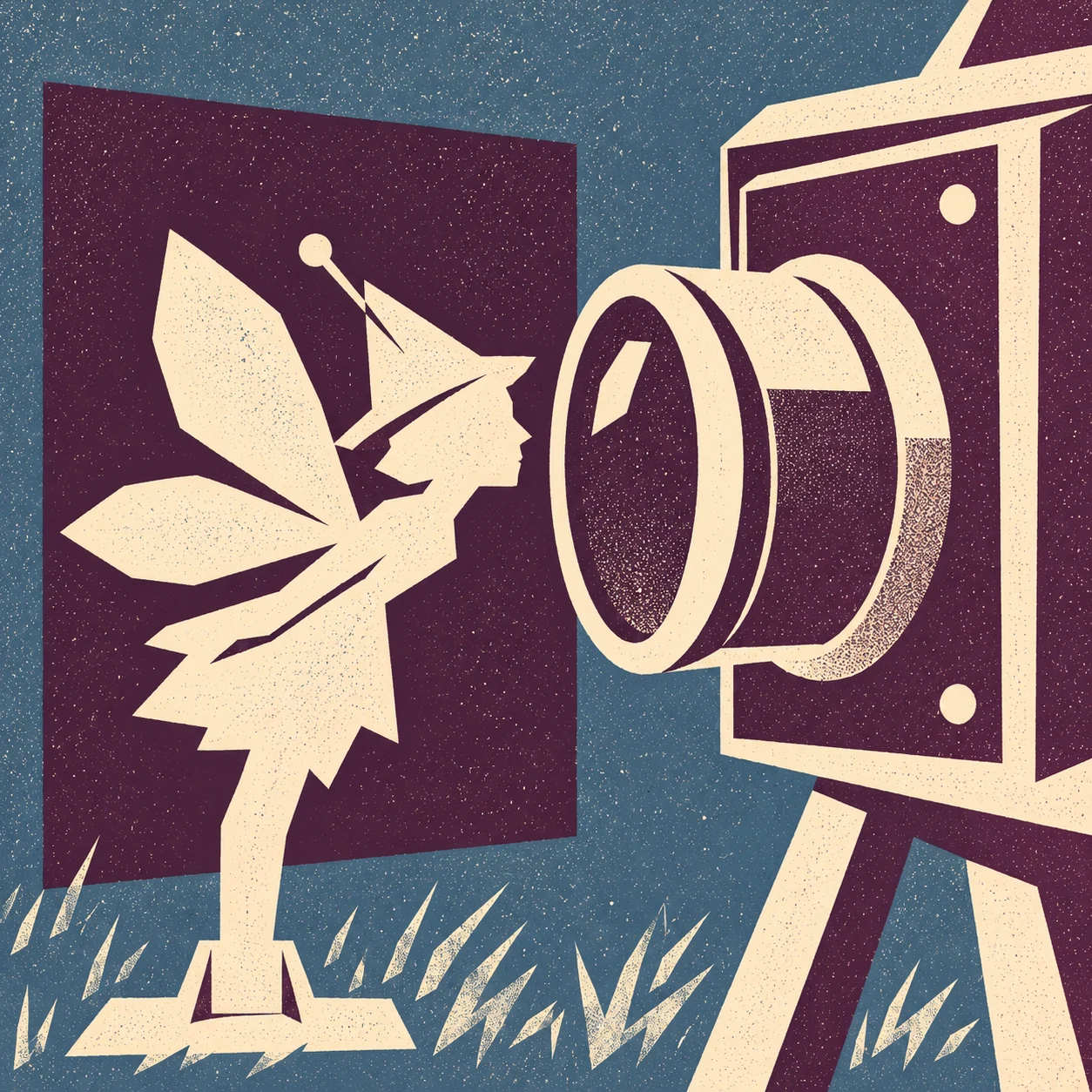
Harold Snelling, a photographic specialist consulted by Gardner, gave the strongest technical endorsement. According to the correspondence Conan Doyle printed, he was certain the first photographs involved a single exposure and that the fairy figures had moved during it. Gardner described pressing him about cardboard figures, paintings and studio artifices. Snelling’s assurances convinced him that the objections had been answered.1
The inference went beyond a claim that the negatives lacked obvious alteration. Movement, if securely demonstrated, would have been relevant to the possibility of fixed paper shapes. However, the reader received Snelling’s conclusion through the advocates’ account, rather than a controlled experiment showing the figures behaving independently of their makers. Confidence in his ability to detect a trick became part of the evidence that no trick had occurred.1
Conan Doyle also took the negatives to Kodak’s offices in Kingsway. The answer he records was much more cautious. The examiners found no evidence of superposition or another photographic trick, but thought they could produce comparable pictures by ordinary means. They would not say the images were supernatural. The book itself therefore contradicts the familiar shortcut that photographic experts collectively authenticated the existence of fairies.1
Kodak’s position left a straightforward distinction intact. A photograph can be genuine as a photographic object and misleading as an account of the world. A single exposure does not require a living subject. A camera pointed at a paper dancer records a paper dancer. Finding no second exposure, pasted composite or retouched negative cannot establish the biological status of the shape in the foreground.
They would not undertake to say that these were preternatural.
Conan Doyle recognised the objection but resisted its force. A skilled conjurer’s ability to imitate a result, he argued, did not show that an apparently untrained child had used conjuring. As a general logical point, that is correct: demonstrating one possible method does not prove that method was used on a particular occasion. In this case, however, it also meant that a feasible ordinary explanation still needed to be excluded.1
His answer shifted towards the people. Could children in that household have possessed the necessary equipment, ability and motive? Would a respectable family have sustained a fraud? These were legitimate investigative questions, but the answers rested heavily on impressions and assumptions. A person could be honest in most dealings, fond of a practical joke and capable of drawing a convincing little figure.
Even the category of expertise was unstable. Snelling’s knowledge of photographic processes could help identify a composite. It did not automatically qualify him to judge whether a village girl could draw a paper figure, nor whether a family’s reluctance to seek publicity eliminated the possibility of an original joke. Several different questions had become bundled together under the authority of a photographic verdict.1
The pictures’ visual charm encouraged the confusion. The fairies appeared graceful and complete, rather than obviously clumsy props. Advocates treated that grace as an obstacle to fabrication. It could equally be a reason to investigate whether the forms followed an existing illustrative convention. What looked like the natural perfection of another order of life might instead be the practised line of a human artist.
The objection already in print
The paper-figure explanation was available long before the confessions. Conan Doyle included criticism from Major John Hall-Edwards, a medical radiography pioneer, who said the pictures could have been made with cutout figures placed near the sitter. He also described a possible rephotographed composite. The latter was not needed for the actual cutout method, but the first suggestion reached the essential point: arrange the fiction before taking the photograph.1
Hall-Edwards also challenged the presentation of Elsie as incapable of such work. He pointed to reports of her drawing and employment in a photographer’s business. Some of his wider remarks about imagination and children reflected the prejudices of his period, rather than evidence about these particular girls. His technical objection remains separable from them: the negative alone did not exclude a staged subject.1
Gardner replied that working as an errand girl or shop assistant did not establish photographic mastery. That rebuttal answered an exaggerated version of the problem. A staged paper figure required neither mastery of a darkroom nor a sophisticated optical apparatus. The relevant abilities were drawing, cutting, arranging a small object and operating the available camera. Presenting the alternative as an expert’s elaborate fake made the children’s actual task seem implausibly demanding.1
The posture of Frances in the first photograph also attracted comment. She faced the camera rather than visibly responding to the fairies. The advocates said cameras were more novel to her than fairies. Critics saw a sitter posing. Neither interpretation could establish the whole case on its own, but the dispute shows how an ordinary photographic detail could be made to fit either expectation.1
The same happened with apparent movement. For Snelling, the figures moved. For critics, their frozen grace looked unlike an ordinary snapshot of living activity. Gardner argued that fairy bodies need not behave like skeleton-framed mammals. Once that possibility was accepted, an apparent discrepancy with familiar motion could be reclassified as a characteristic of an unfamiliar being. The explanation could expand to accommodate the picture rather than being tested by it.1
Lighting produced a similar answer. Asked about different shadows, Conan Doyle invoked the possibility that the beings’ material emitted a faint light of its own. That would change their shadows. Yet the glow had not been independently measured. It was another property introduced to rescue an interpretation from an objection. The photograph appeared to show what a fairy was like because the proposed fairy was allowed whatever properties the photograph required.1
The debate was therefore never simply a credulous age confronting a technology it did not understand. Contemporary sceptics knew about staged scenes, trick photography and reproduction. The museum’s later archival research identifies a teenage correspondent who proposed cardboard figures in 1920. Doubt was present inside the story from the beginning, rather than an insight available only after later generations learned to distrust pictures.4
Conan Doyle even reproduced deliberate imitations. A picture by photographer Ina Inman was good enough to receive serious consideration for a time, though he and Gardner ultimately rejected it. He continued to distinguish expert imitations from the originals attributed to inexperienced children. The ordinary method kept returning; the advocates kept placing its supposed difficulty beyond the cousins’ abilities.1
Three more from the glen
In 1920, the investigation supplied new equipment. Gardner arranged cameras and photographic plates so the cousins could try again when they were together. The plates were marked as a precaution against substitution. Better control over the materials appeared to offer a way past doubts about the first two pictures. It did not provide control over everything placed in front of the lens.12
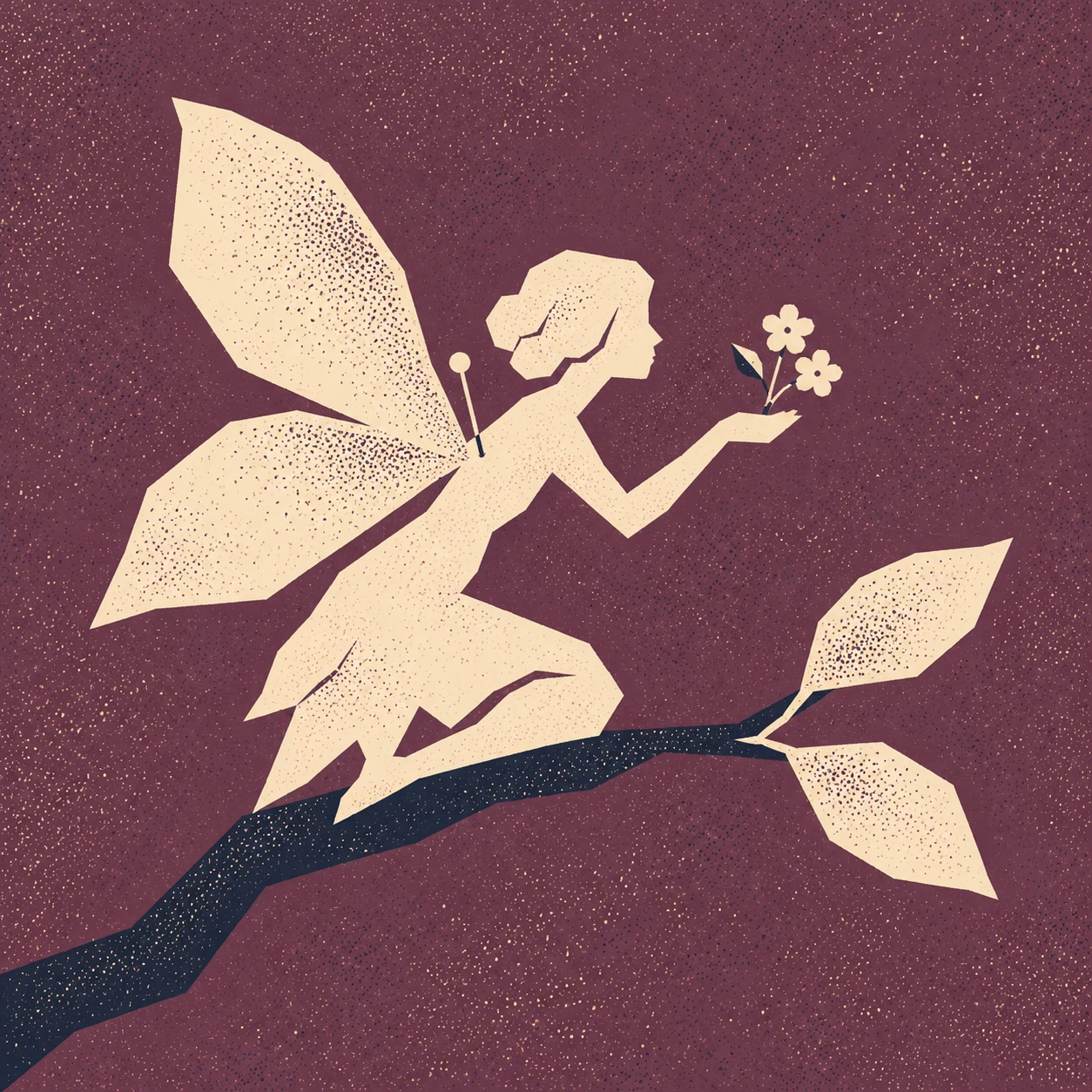
The new series comprised three images taken in August: a leaping fairy near Frances, a fairy offering flowers to Elsie and the group later known as Fairies and Their Sun-Bath. The first two extended the familiar arrangement of human sitter and small figure. The fifth photograph was different, placing the supposed fairy activity among grasses without one of the cousins occupying the frame.1
Gardner’s letter of 6 September 1920 announced success. He had received three more negatives, and the accompanying prints went to Conan Doyle, then abroad. Snelling again endorsed them. In particular, the image described as a fairy bower seemed to its supporters beyond the possibility of fabrication. A new set of pictures, made with supplied equipment, had strengthened the conviction of people already persuaded by the first pair.1
On 21 October, writing from Melbourne, Conan Doyle welcomed them. His letter treated the new pictures as confirmation for the public, rather than a result still requiring an adversarial test. He and Gardner, he said, needed no confirmation. The investigation had acquired a second purpose: answering the audience’s expected objections to a discovery the investigators themselves believed had already been made.1
Marked plates addressed a real possibility, but only one. If a photographer secretly replaced a plate, a mark might expose the substitution. A photographer who used the correct plate to record a drawing had not defeated that control. The check would work as designed and the fiction would remain. Cottingley’s second phase is striking because its precautions could be completely successful without testing the central alternative.
The new photographs also attracted interpretations supplied after exposure. The fifth image contained a shape described as a sheath, cocoon or bower. Conan Doyle’s caption explained it as a sort of magnetic bath used by fairies. According to the narrative, the girls had not understood the feature themselves. Adult interpreters now claimed knowledge of what the children’s camera had recorded beyond their own recognition.1
This was a substantial addition. An uncertain form among plants became evidence about the habits of an invisible population. The explanation was not produced by comparing repeated controlled observations of the same phenomenon. It came from an existing occult account of nature, applied to a photograph already accepted as authentic. The more the picture required explanation, the more room it gave interpreters to elaborate that world.
Gardner returned to the sites and photographed their surroundings. These visits could establish where a picture had been taken and whether a bush or pool existed. They could not retrospectively establish that a small foreground figure had moved independently. The investigation accumulated genuine facts about Cottingley while leaving the crucial photographic act almost exactly where it had been in 1917: dependent on the cousins’ account.1
Paper, pins and a long silence
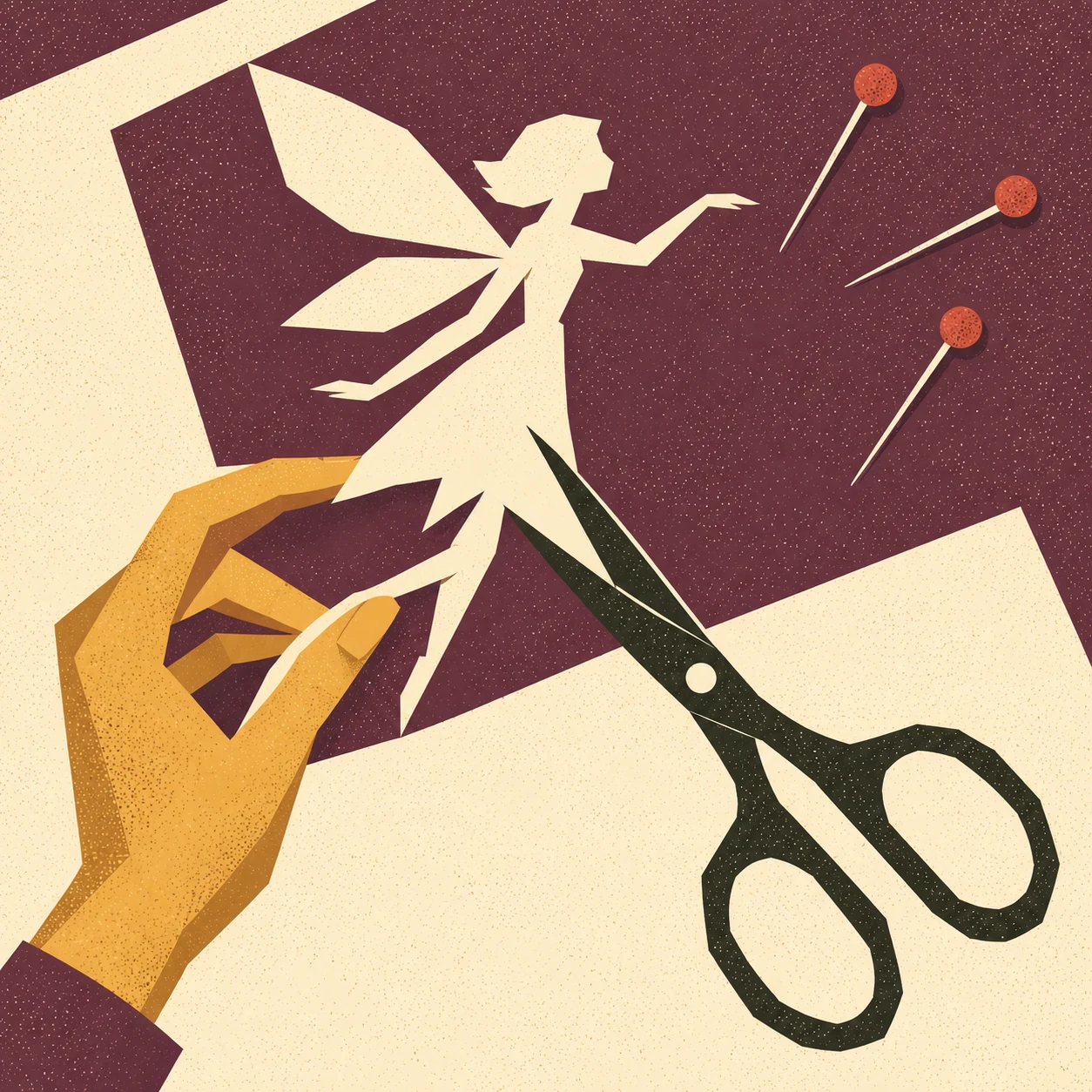
The later explanation was materially modest. Elsie had made drawings inspired by illustrations in Princess Mary’s Gift Book, and the figures were cut out and supported with hatpins. The museum preserves a later fairy drawing and Elsie’s correspondence with photographic writer Geoffrey Crawley, including a letter dated 17 February 1983. The means of production could be explained without a hidden team of adult photographic specialists.2
The literary source adds a particularly neat connection. The gift book included Alfred Noyes’s A Spell for a Fairy, illustrated by Claude A. Shepperson. A Christie’s catalogue dates the volume to 1914 and identifies those drawings as the basis of Elsie’s fairies. The Portsmouth Conan Doyle Collection notes that Doyle himself had contributed to the volume. His campaign had elevated figures shaped by the same publishing world in which he worked.67
It is better to describe the fairies as copied drawings than to assume the girls simply cut printed figures directly from the book. The museum’s account specifies Elsie’s drawings. What mattered photographically was the resulting flat object. It could look animated when seen as a small figure against a much larger landscape, particularly once a viewer had been told what the picture supposedly showed.2
The admissions were late, and their lateness requires some care. An explanation offered after decades is not automatically a precise recollection of every exposure. Nonetheless, these were accounts from the makers, identifying a feasible method and a source for the figures. They supplied positive evidence that had been missing from a debate conducted largely through external inspection and opinions about what the girls could have done.
Why maintain the story for so long? A practical joke can become difficult to retract once an eminent adult has vouched for it. That is a plausible account of how the situation developed, but no outsider can now measure the cousins’ feelings at each stage. Their later descriptions matter as testimony about their experience; they do not grant unlimited access to their younger selves’ motives.
Historian Christine Ferguson offers a further reading. Her study of the surviving objects argues that the familiar tale of two cunning girls fooling great men obscures the unequal relationship between the makers and the prestigious adults who controlled the pictures’ public meaning. Cameras and plates could become obligations; artistic ability was minimised when it threatened the paranormal interpretation. This is an argument about agency and power, rather than evidence that fairies existed.3
It also changes how the phrase photographic hoax should be used. The photographs were fabricated evidence for the fairy claim. That does not require the original act to have begun as a calculated attempt to deceive an international public. A family performance and an organised public campaign are different stages. The adults who transmitted the pictures helped determine the size and persistence of the story, even if they believed every word they wrote.
Conan Doyle’s own book makes that process unusually visible. It contains objections, refusals, evasive answers and ordinary alternatives, alongside his replies. His conviction did not arise because nobody had imagined paper fairies. The possibility was repeatedly presented. He rejected it because it conflicted with his assessment of the children and the significance he believed the pictures possessed.1
Was the fifth photograph different?
Frances accepted the fabrication of the first four photographs but continued to defend the fifth. Elsie said all five were false. The museum records that disagreement and identifies the fifth as the only picture over which their later accounts diverged. Reporting an admission by both women without this qualification would erase a real part of the evidence; treating the exception as proof of fairies would add something the evidence does not supply.2
The distinction is between a documented claim and a demonstrated event. Frances’s insistence shows that she continued to describe one image as genuine. It does not identify the shapes independently or exclude an ordinary photographic cause. Elsie’s contrary account prevents an appeal to unanimous testimony. Neither woman’s confidence can substitute for a controlled record of an exposure made decades earlier.
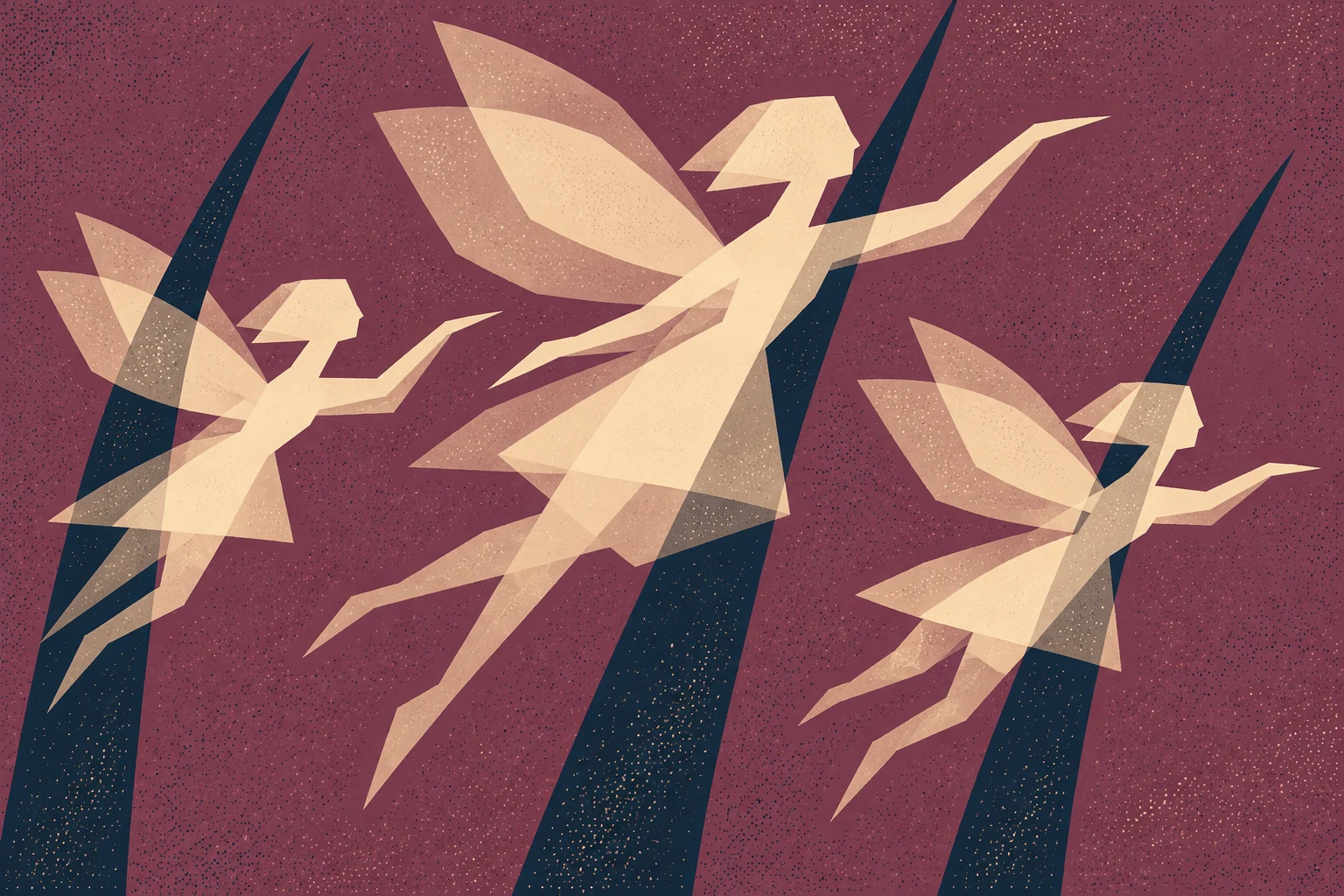
Double exposure provides an ordinary route to overlapping, partially transparent forms. Ferguson discusses it in relation to the fifth picture, contrasting that photographic effect with the cutouts used for the first four. This commission has not repeated the original technical investigation or inspected the glass plate. The account should therefore be treated as an available mundane explanation, rather than a newly certified reconstruction of each movement and exposure.3
The fifth picture also had a special status in 1920. It seemed to show more than its makers had noticed, and advocates supplied an occult interpretation of the unexplained shape between the figures. That history makes later certainty harder to assess. The image had long been surrounded by descriptions telling viewers how to read it. Its unusual appearance cannot be detached from the explanatory language accumulated around it.1
Could genuine fairies have existed while the first four photographs were staged? As an abstract possibility, one proposition does not logically exclude the other. As an evidential account of Cottingley, however, it would require independent support for the beings. The fabricated pictures provide none. The disputed fifth cannot acquire that support simply because it was not included in Frances’s admission.
Conan Doyle had considered a different escape from ordinary fabrication. Perhaps the photographs represented thought-images produced through a psychic process, rather than an independent population of small beings. He mentioned that possibility in the chapter on the second series, though he regarded it as remote. It answered doubts about the interpretation by proposing another extraordinary mechanism, without supplying a separate test that distinguished it from drawings.1
His book also included the clairvoyant Geoffrey Hodson’s reported observations at Cottingley in August 1921. Hodson described beings he said he could perceive. Such testimony may illuminate what believers thought occurred there, but it does not independently establish how an earlier photographic plate was exposed. A claim to perceive fairies and a photograph of a supposed fairy require their own evidence; one cannot silently certify the other.1
The strongest remaining mystery is consequently historical and personal. What did Frances think she saw, and how did her account change as family experience became public controversy? The available record supports careful questions about memory, belief and storytelling. It does not support diagnosing her, dismissing every experience she reported as consciously invented, or treating her continuing belief as a scientific exception to the admitted method.
What survives at Cottingley
As of 7 November 2026, the strongest supported account remains that the famous photographs were made through ordinary means, with direct admissions establishing the cutout method for the first four. The fifth preserves a disagreement in testimony, rather than an independently verified encounter with another form of life. No new result consulted for this article overturns that distinction.34
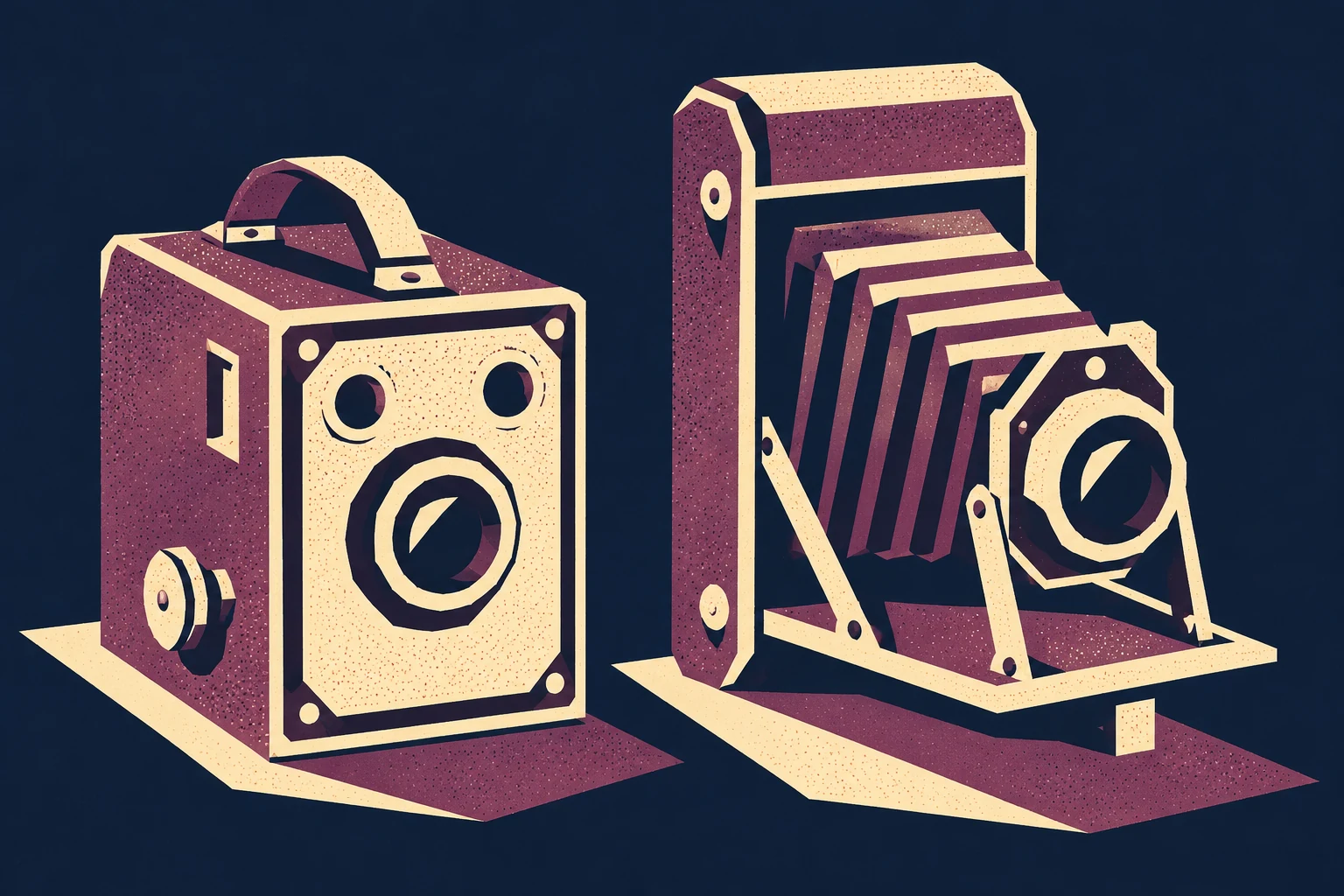
The cameras survive as historical objects. In a 2024 conservation report, the National Science and Media Museum described stabilising the Midg and a Cameo before taking them to the University of Bradford for CT scanning. The work revealed internal construction while protecting fragile materials. It was a study of the instruments, not an announcement that a scanner had discovered evidence for fairies inside them.5
Those objects allow better questions than whether Conan Doyle was simply clever or foolish. What did the camera control? What did an expert actually exclude? Which version of a picture reached the public? How much authority did the people who made it retain? The contemporary record is especially valuable because it preserves several answers that were available before anyone confessed.
A piece of card can be photographed honestly. A glass plate can survive inspection. A family can sincerely deny arranging an international deception. None of those propositions requires the creature in the foreground to be alive. At Cottingley, the decisive error was repeatedly asking the photograph to guarantee more than a photograph could show.
Follow the evidence
Sources & further reading
- The Coming of the Fairies Arthur Conan Doyle · 1922 · Accessed 2026-11-07
- The story of the Cottingley Fairies shows that image manipulation is nothing new National Science and Media Museum · 2012-07-29 · Accessed 2026-11-07
- Power at play in paranormal history Christine Ferguson · 2024 · Accessed 2026-11-07
- Cottingley’s Scientific Fairies and Enchanting Technology Meg Warlow · 2025-09-26 · Accessed 2026-11-07
- Blog from the Basement: Conserving the Cottingley fairy cameras Eleanor Durrant · 2024-07-17 · Accessed 2026-11-07
- Princess Mary’s Gift Book Christie’s · Accessed 2026-11-07
- The Cottingley Fairies Portsmouth City Council, Arthur Conan Doyle Collection · Accessed 2026-11-07