In a darkened French laboratory, a visiting physicist removed a prism without telling his hosts. They continued to locate the spectrum it supposedly produced, bringing a remarkable discovery up against an object that was no longer there.1
An extra light in Nancy
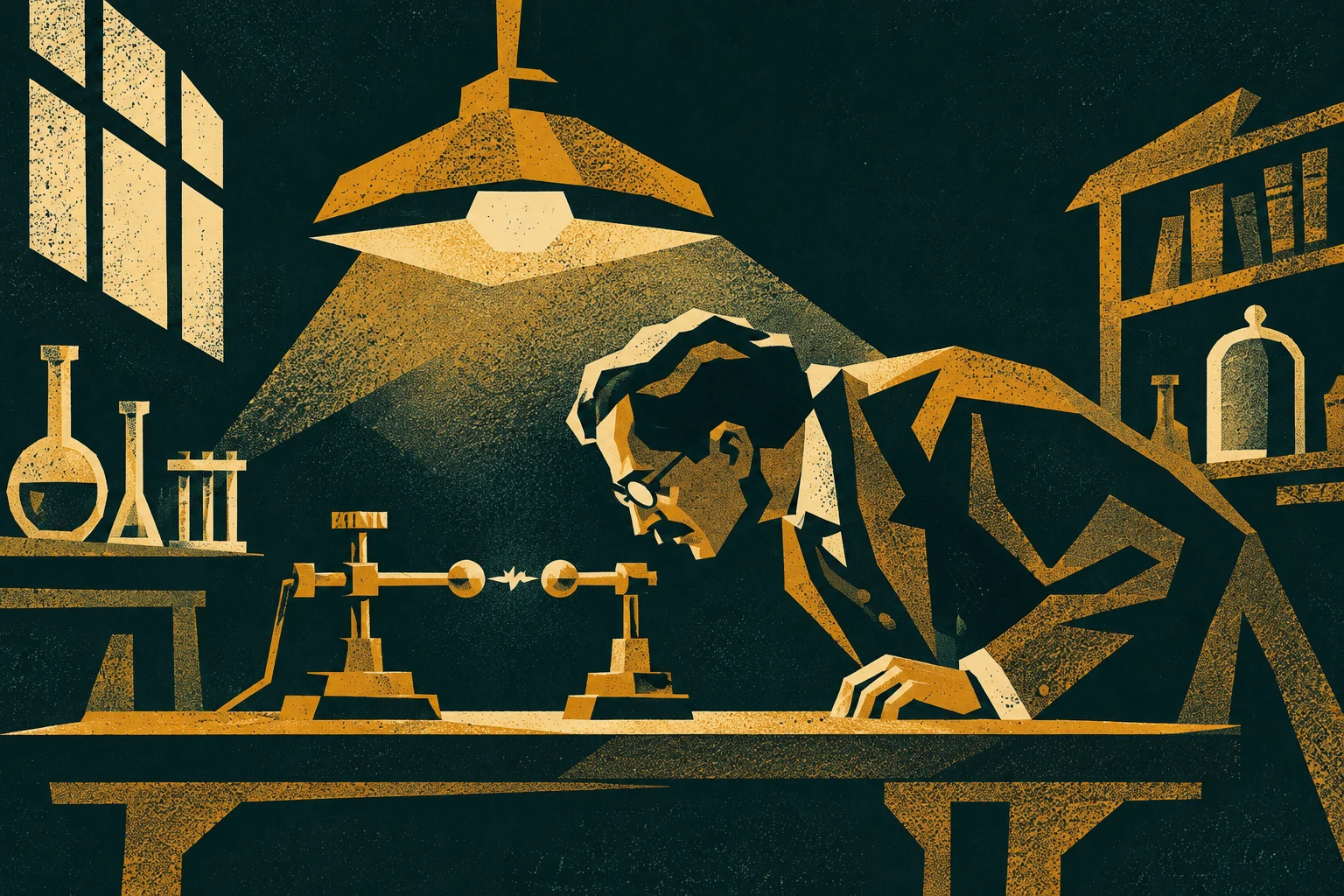
The new radiation began with an old question. In February 1903, René Blondlot was investigating X-rays at the University of Nancy. His apparatus included a small electric spark, whose brightness he watched while changing the arrangement around it. He believed the spark could reveal something about the orientation of the radiation reaching it. Turning the spark-gap appeared to change the effect, and he interpreted the result as evidence that the X-rays were polarised.2
Polarisation concerns the orientation of a wave's oscillations. Blondlot was looking for a particular physical relationship, not simply searching a dark room for something strange. His February paper described the wiring, the positions of the tube and spark, and the intervening screens. It presented a chain of experimental instructions that another physicist ought to have been able to follow. The difficulty would lie in deciding what the tiny spark actually did.2
By 23 March, his explanation had changed. A quartz prism appeared to bend the radiation towards the spark; moving the prism apparently altered its brightness. Blondlot concluded that the effects belonged to a different kind of radiation from the X-rays he had set out to study. His communication announced a new species of light. The claimed discovery was an attempted correction of the earlier interpretation, rather than a separate phenomenon arriving with its own unmistakable detector.3
There was an important distinction between the source and the signal. The proposed rays were invisible. What the observer saw was an ordinary luminous object allegedly responding to them. A brighter spark was therefore evidence only if the increase could reliably be connected to the unseen radiation. Without that connection, the experiment recorded a change in appearance and supplied an explanation for it, with no assurance that the two belonged together.3
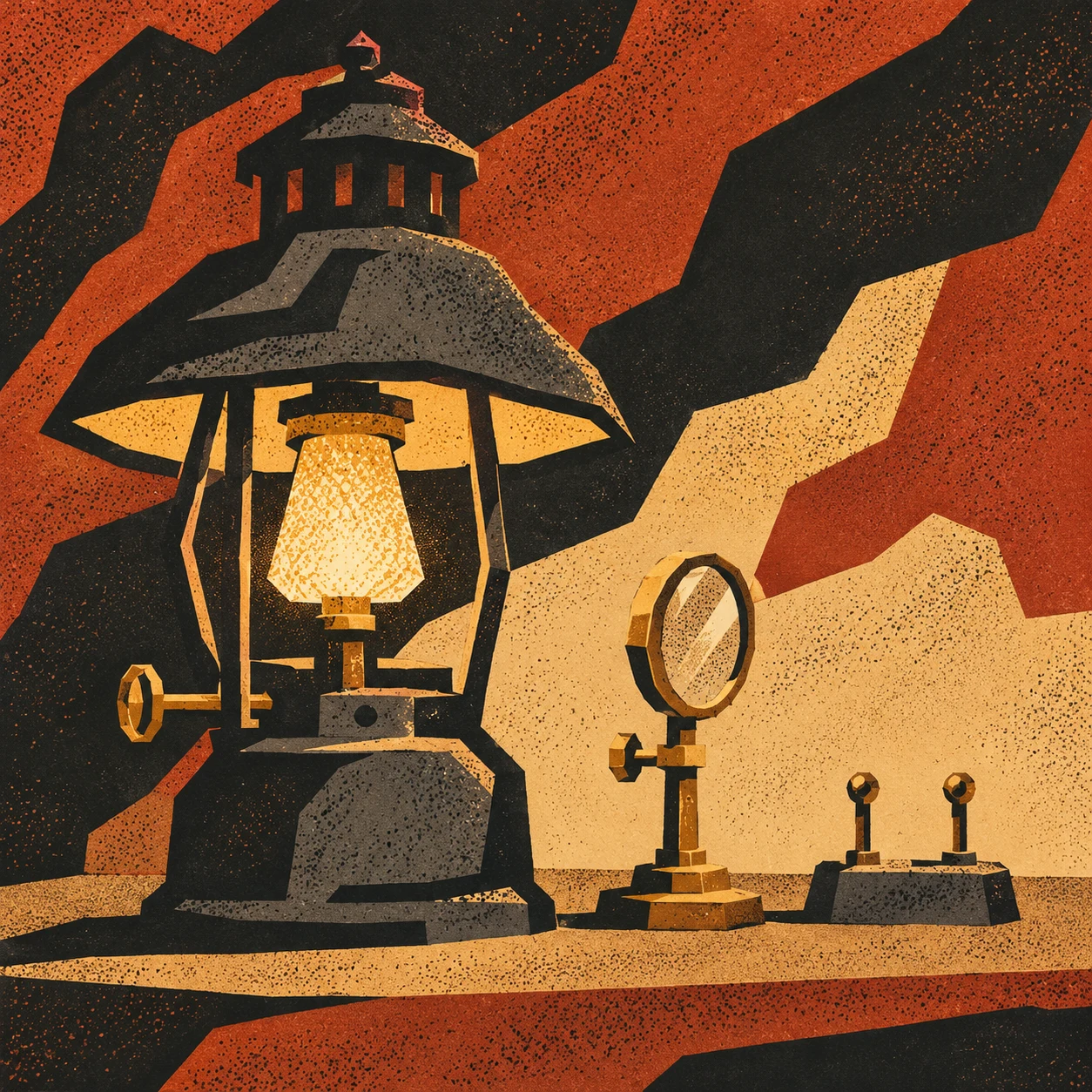
An incandescent gas burner soon joined the X-ray tube as a supposed source. In a paper dated 11 May, Blondlot enclosed an Auer burner in a metal lantern, allowed its radiation through an aluminium window and used a lens to concentrate it. The little spark served as a detector again. Water and some intervening materials appeared to interrupt the effect, while other barriers apparently let it pass. This offered a programme of experiments involving familiar objects, rather than a phenomenon confined to one complicated tube.4
On 25 May he used the name N-rays, honouring Nancy. He also described sources and detectors beyond the original arrangement, including a small gas flame and calcium sulphide previously made phosphorescent by light. Phosphorescence is the continuing emission of light after the exciting illumination has stopped. In Blondlot's account, the new radiation strengthened that existing glow. The material did not have to blaze into life; the observer had to recognise a modest increase.5
The claim was sufficiently interesting to travel beyond Nancy. Looking back soon afterwards, psychologist Henri Piéron described how a small problem in physics had become a controversy in which psychology also had a claim. His opening account traced the successive announcements rather than treating the discovery as one isolated mistake. The reports had accumulated, each providing new places to look for the same elusive effect. A disputed spark was developing into a substantial experimental world.17
Bricks that kept the sun
By November 1903, that world could continue producing results after its supposed source had been removed. Blondlot reported that a phosphorescent detector remained responsive when the burner was extinguished and taken away. His explanation was that the quartz lens had stored the radiation and become a secondary source. Other materials seemed capable of the same behaviour. An effect that persisted after switching off the apparatus could therefore be interpreted as another property of the rays.6
The distinction matters when reading the original papers. Blondlot did not necessarily regard a lingering effect as an embarrassing failure of the switch. Within his interpretation, persistence was itself a discovery. An object had absorbed something and was releasing it. That was a testable proposition, but it also meant that removing the original source no longer supplied a straightforward comparison between radiation present and radiation absent. The equipment surrounding the experiment might now count as a source too.6
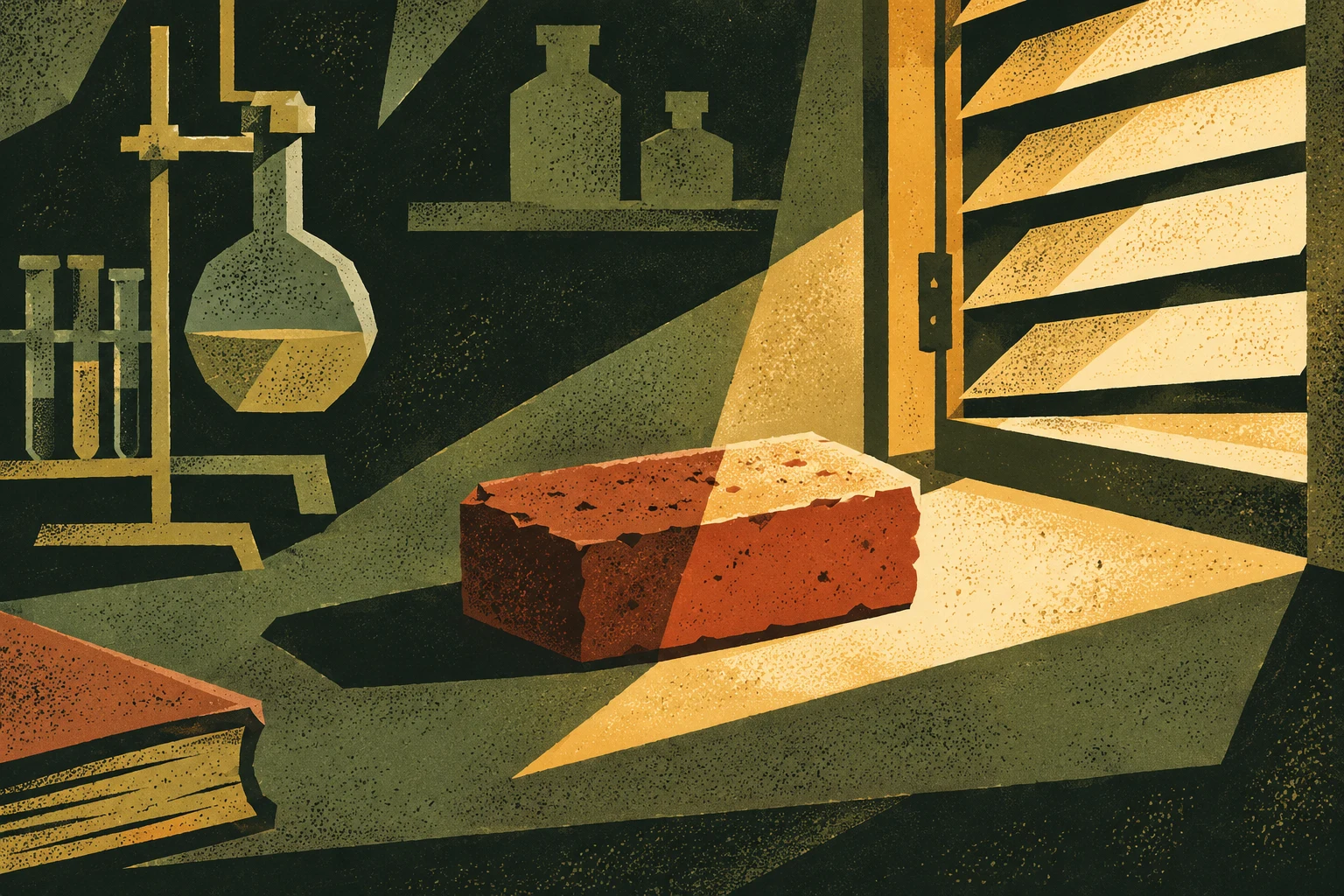
A sun-exposed brick supplied one of the most memorable examples. In his 23 November communication, Blondlot described bringing such a brick near an observer looking at a dimly illuminated strip of paper. The paper appeared brighter. He then extended the claim to a clock dial at a distance: with the alleged radiation directed towards the eyes, the vague patch apparently became a recognisable face, even yielding its hands. The proposed action had moved from the luminous object towards the person observing it.7
That move raised an obvious difficulty. If water stopped N-rays, how could they enter an eye containing water? Blondlot's paper addressed the problem by distinguishing salt water from pure water. He reported that salt rendered water transparent to the radiation. The explanation belonged to the experimental argument, and deserves to be read there, rather than reduced to an amusing list of impossible properties. The question is whether the tests established the distinction independently of the same uncertain visual judgements.7
The widening field reached the human body. In a later French historical account, Jean-Michel Bloch described the work of Augustin Charpentier, a medical physicist in Nancy who attributed radiation to animal tissues, contracting muscles and nervous centres. These claims were far removed from merely checking a spark beside a tube. They suggested that a physiological activity could produce a detectable physical emission, offering other investigators their own routes into the subject.20
By then, Blondlot was no anonymous amateur seeking attention from a closed scientific establishment. Bloch's account records his earlier academic work and recognition for research on electromagnetic phenomena. That background explains why colleagues might take an unexpected result seriously. It does not establish that the result was correct, but it changes the historical problem. The puzzle concerns the adoption of an unreliable observation by experienced people, rather than their encounter with an obvious outsider's trick.20
There was also a practical attraction in the materials. A brick, a small luminous screen and a familiar clock made the claimed action imaginable. They offered apparently simple demonstrations which could be repeated in another room. Yet simplicity of equipment does not guarantee simplicity of interpretation. If the decisive change remains a marginal impression of brightness, adding ordinary objects can multiply the opportunities for observation without making the underlying signal any easier to distinguish from its surroundings.
Learning to see
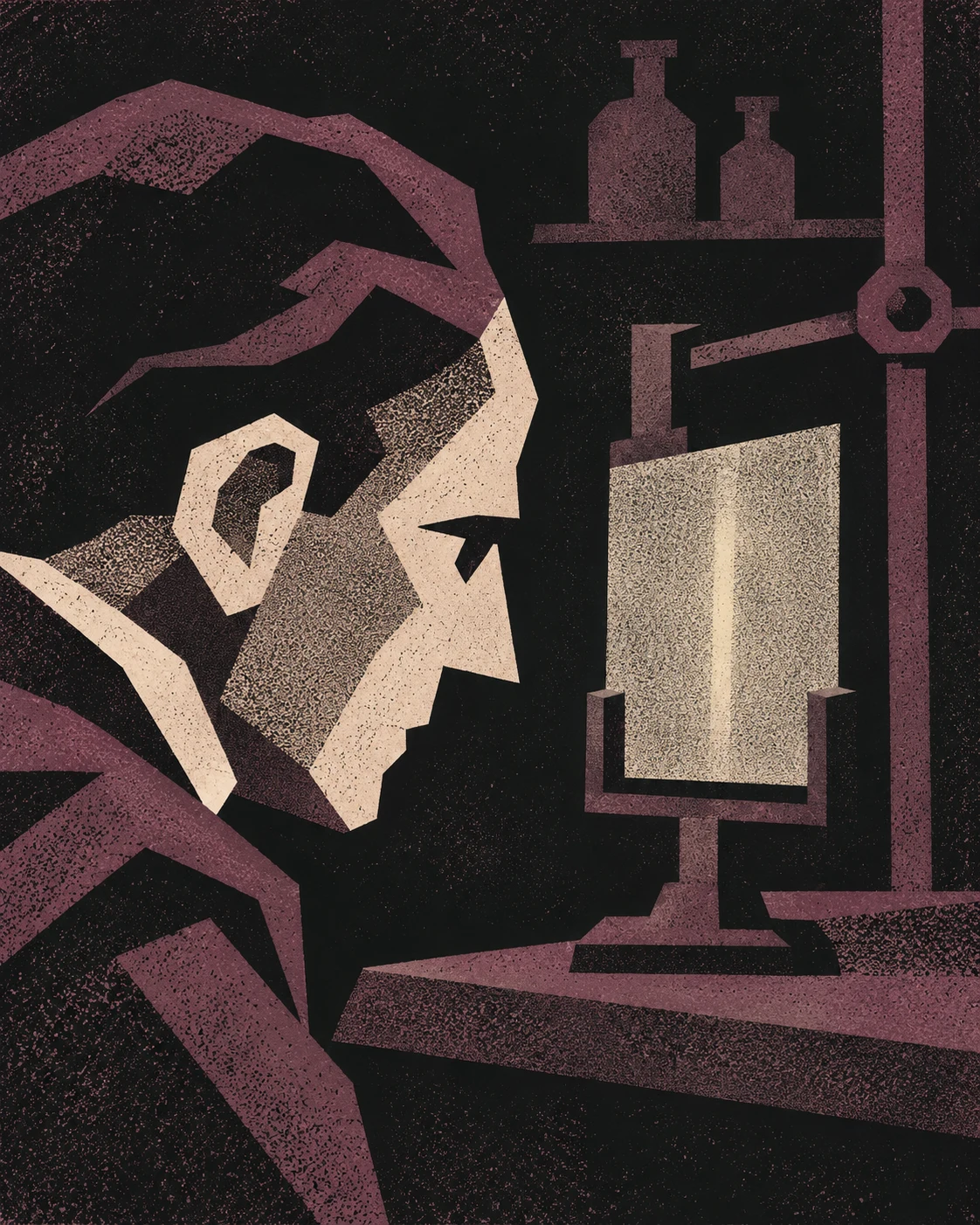
Blondlot acknowledged that observers differed. In his November paper on additional effects, he explained that some people recognised the changes immediately, while others initially found them close to the limit of perception. Practice could supposedly make the result clear. He also described ordinary reflected light, including a strip of white paper and a polished knitting-needle, as susceptible to the action. The sought-for effect no longer required the spark, although recognising a slight visual change remained essential.8
There is nothing inherently absurd about a trained observer becoming better at a delicate task. The difficult question is what demonstrates that training has improved detection of an external cause. If a learner is told what should appear, then learns to report it, agreement alone cannot settle the matter. A useful test has to distinguish improved observation from improved anticipation. That distinction becomes especially important when the instructor and learner already know how the apparatus has been arranged.
Another paper explained why people looking at the same screen might disagree. Blondlot claimed that the radiation increased the light seen from directly in front, reduced it at a very oblique angle and produced no appreciable change from an intermediate position. An audience could not simply gather round and expect a shared demonstration. Different viewing positions were offered as a physical explanation for contradictory observations, rather than a reason to abandon the phenomenon.12
Blondlot warned explicitly that an audience would see contradictory results or none at all. The practical implication was striking: a visitor could stand beside a successful observer and still fail to witness the claimed phenomenon. His explanation preserved a physical reason for that disagreement, but it also limited how a demonstration could persuade. A clear comparison needed observers taking the specified position in turn, with the condition of the apparatus concealed from them.12
The precision of the published work made the issue harder to dismiss casually. In January 1904, Blondlot described an aluminium prism dispersing the alleged radiation, with a narrow phosphorescent strip used to locate different components. He calculated refractive indices from their apparent positions and compared results obtained with prisms and a lens. Refraction is the bending of radiation as it passes between materials; dispersion separates components with different optical behaviour. These were recognisable methods, applied to an unconfirmed signal.9
In February, Blondlot added N1 rays, a variety said to dim a weak source rather than brighten it. His paper describes searching the less-deviated part of the spectrum after another investigator's observations prompted the idea. He reported finding the anticipated decrease, which reversed when the rays were intercepted. An increase and a decrease could now both belong to the programme, provided they were assigned to the appropriate radiation. Distinguishing the two required confidence in precisely the visual judgements already disputed.11
Historians have placed that problem within the changing measurement of light. Sean François Johnston's study describes the period as one in which visual and physical methods were being compared and reworked, rather than an age in which everyone already agreed that looking was worthless. An observer's eye could be part of a serious instrument. The N-ray dispute concerned how to make such an observation accountable, and whether another method would confirm the claimed change instead of simply inheriting it.22
A photograph of a flicker
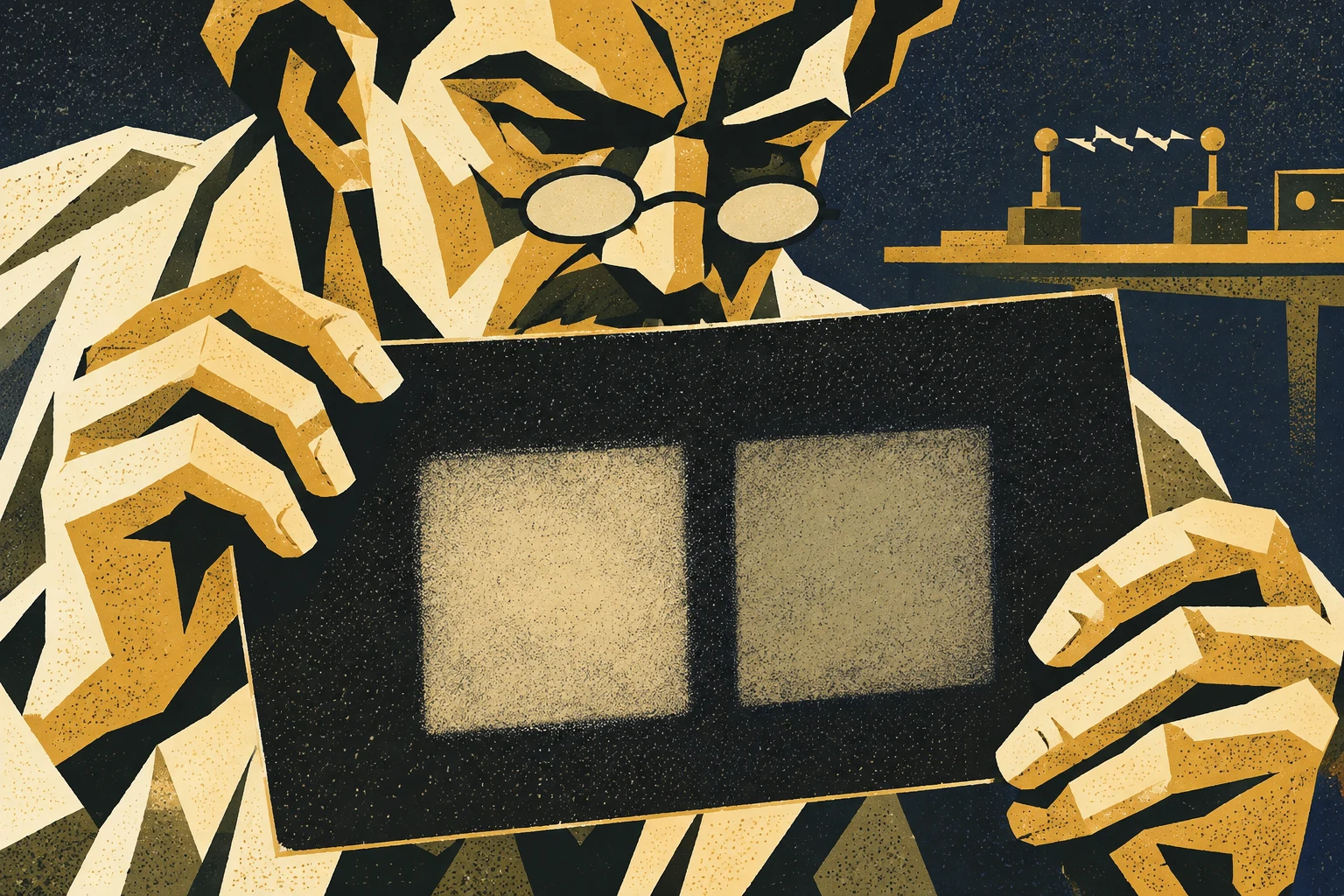
A photograph seemed to offer a way out. Blondlot's February 1904 paper carefully distinguished photographing N-rays from photographing their proposed effect. The rays were not supposed to act directly on the sensitive plate. Instead, they allegedly brightened a small ordinary spark, which the plate recorded. If the picture differed when the rays were admitted, that might provide a durable trace which another person could inspect without learning how to look into the dark.10
His arrangement alternated the exposure of two halves of a plate. A screen moved with the holder, changing whether the spark was supposedly subject to N-rays, while a metronome regulated successive intervals. Alternating the conditions was intended to reduce the influence of fluctuations. This was an attempt to meet an objection with a procedure, not an admission that an image could be obtained without experimental care. The dispute shifted to whether the procedure actually isolated the cause.10
In June, John Butler Burke at the Cavendish Laboratory challenged that isolation. He had tried photographic tests and reported no difference that could not be assigned to an ordinary source of error. A metallic screen placed close to the spark might itself alter the electrical conditions, he suggested. His alternatives included removing the alleged source or keeping a screen farther from the spark. A barrier intended to stop one influence could introduce another, producing a difference for the wrong reason.14
Burke also separated an effect on a luminous object from an effect on an observer's retina. Those are different propositions. A change occurring only in perception would not make the object's light impress a photographic plate more strongly. The distinction exposed a tension between explanations that could sound mutually supportive when gathered under one name. If the photographs were to settle the issue, the experiment had to establish an actual change in emitted light, with its ordinary electrical causes controlled.14
American investigators R. R. Ramsey and W. P. Haseman reported their own photographic attempts. In some arrangements they watched a phosphorescent screen decay without finding that the supposed rays overcame the fading. Apparent positive differences in other plates were tested further and attributed to heat or initial conditions of luminosity. Their report also included negative spark photographs. It is a record of attempts to separate a real photographic difference from the particular explanation being proposed for it.13
This is more informative than saying that cameras cannot be deceived. A plate receives whatever light reaches it under the conditions of exposure. It does not certify why that light arrived, whether the source fluctuated, or whether the comparison changed something else. A photographed difference can be genuine while the new force invoked to explain it is absent. The evidential question survives the move from an impression in an observer's eye to a visible mark on glass.13
The photographs still survive as part of the story's material record. MIT Libraries' discussion of Blondlot's collection reproduces the paired effects he offered as support. It also notes the later objections to photographic conditions. Their survival allows the reader to encounter what looked persuasive, rather than merely hear that earlier researchers were foolish. The plates are evidence of an attempt to demonstrate N-rays; their existence does not make them evidence that N-rays existed.19
An unwelcome visitor
The visitor who made the dispute famous was Robert Williams Wood, an American physicist at Johns Hopkins University. The American Physical Society's historical account places his work in optics alongside his reputation for experimental ingenuity and practical jokes. In 1904 he travelled to observe the Nancy demonstrations. That background helps explain the part he played in later retellings, where the dark room provides both a scientific setting and the opportunity for a theatrical intervention.18
Wood told Nature that he arrived sceptical but hoped to be convinced. After more than three hours of demonstrations, he reported that none persuaded him. His letter appeared on 29 September 1904, without naming Blondlot.118
He asked an observer to identify when his hand interrupted the supposed radiation reaching a spark. The reported fluctuations did not track his movements; changes were still announced while he held his hand still. The observer failed to identify the condition offered as the cause.1
The value of the test lay in its separation of information. One person knew what the hand was doing; another was supposed to judge the light. A convincing result needed the two records to correspond. This demanded more than a shared impression that something became brighter after somebody announced an intervention. The ordinary account of the procedure makes clear why an experiment could be persuasive to its operators yet fail a visitor who changed how its stages were disclosed.
Theoretical doubts were also circulating. In a later study, philosopher János Laki compares objections involving the reported wavelengths, the optical arrangement and the possibility of separating closely spaced components. He points out why simply declaring the reports incompatible with existing physics could not have settled the matter for their supporters. An unexpected discovery might require revisions to accepted ideas. What it still required, however, was an observation whose reliability did not depend on accepting the discovery in advance.23
The alternative explanations were not identical. Some critics concentrated on perception; others investigated ordinary physical causes such as heat. Those possibilities can coexist. A screen might genuinely change under one arrangement, while a different demonstration produces only an expected impression. Neither would establish the particular radiation Blondlot described. Finding that the reports had more than one mundane source would complicate their reconstruction without rescuing the common name under which they had been published.23
That is why another inconclusive demonstration could not be repaired merely by changing the explanation of what the visitor ought to see. The question had become whether the apparatus could produce a discriminating result: a result different when the relevant cause was present from when it was absent. An experiment which generates the same answer under both conditions leaves that causal claim unsupported, however experienced the person reporting the answer might be.
The prism in the dark
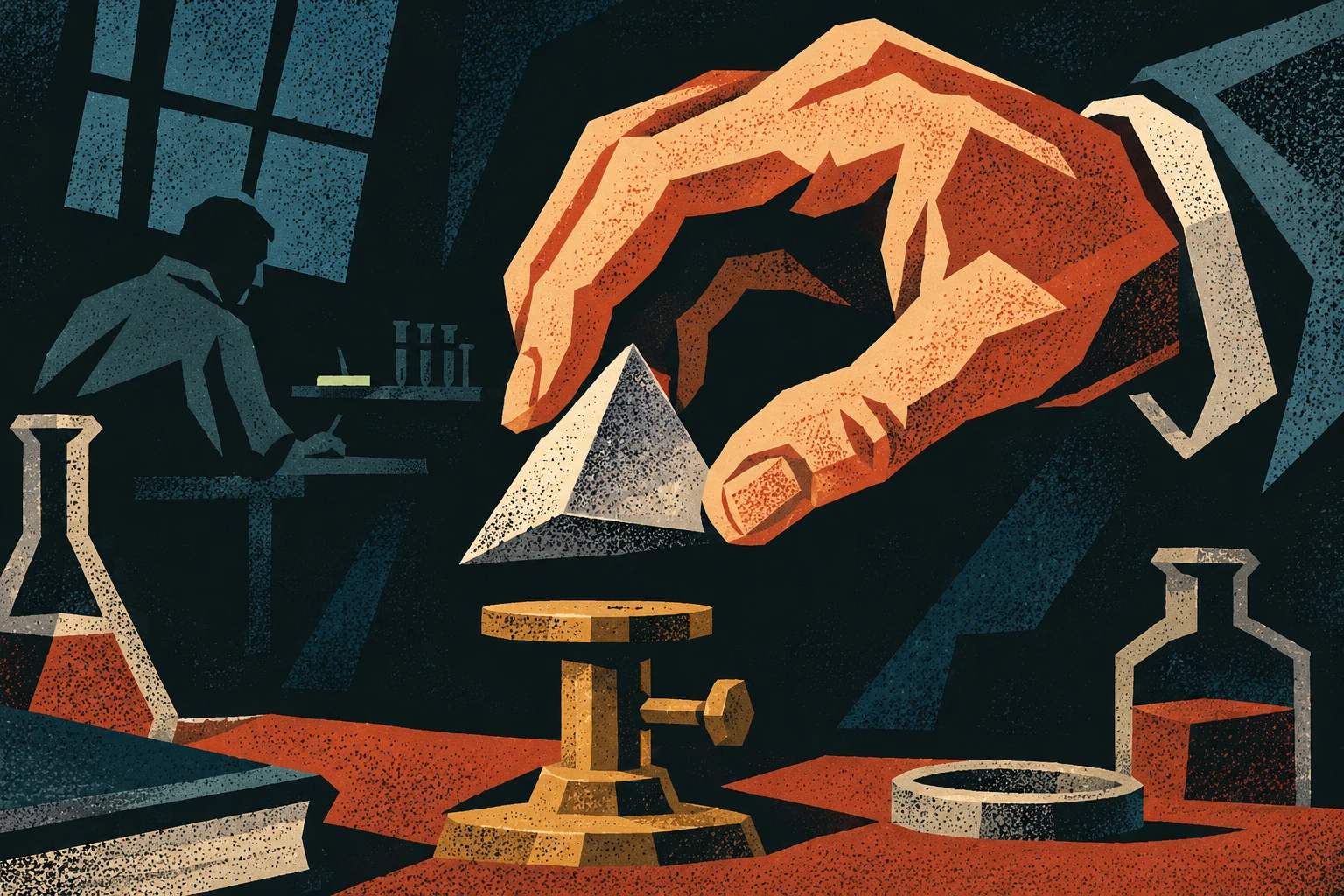
The aluminium prism offered a particularly sharp version of that test. It was supposed to bend and disperse the radiation so that an observer could locate components of a spectrum with the luminous detector. A prism was not the source of the alleged rays. Its role was to change their paths. Removing it would therefore remove the reason for finding that same dispersed pattern at those same positions, even if radiation from the source continued travelling through the apparatus.9
During the demonstration, Wood secretly took the prism away. The observers continued to report the pattern. This is the episode preserved in the American Physical Society's account and repeatedly used to explain the collapse of N-rays. Its force comes from the unchanged observation, rather than from the cleverness of the concealment. The experimenters were describing the consequences of an optical component without knowing that the component was absent. Their reported signal did not depend on the arrangement they thought they were measuring.18
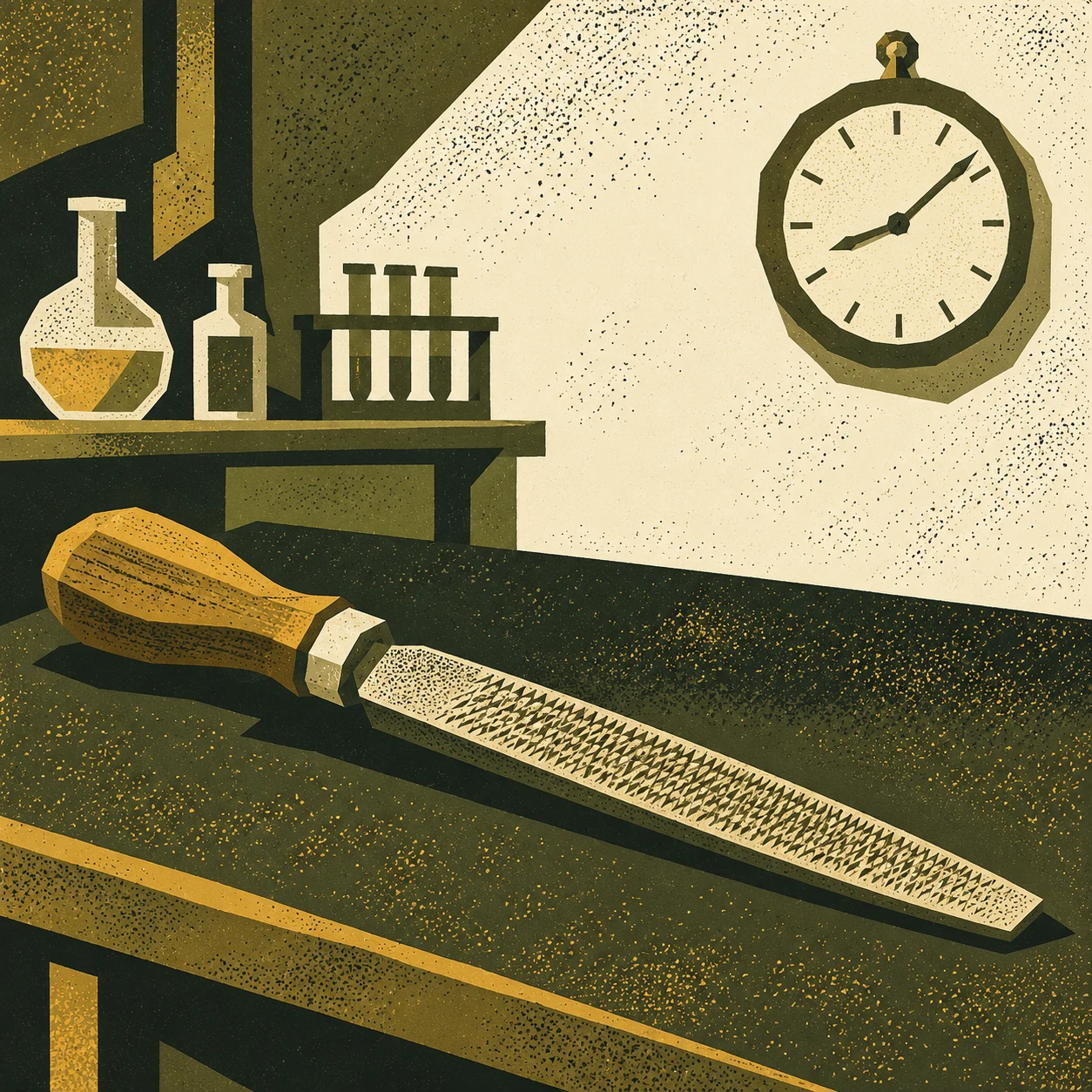
Wood also reported three failed attempts to identify the prism's orientation, attributed by his hosts to fatigue. In the clock demonstration, he secretly substituted wood for a steel file; the reported improvement survived. The prism was one of several failed comparisons.1
Fatigue could affect performance, and a three-trial exercise was not a modern statistical investigation. The point is narrower. A failure in those conditions cannot support a claim that the operator successfully detected the rays in those conditions. If tiredness made the reading unreliable, then a reliable reading remained to be demonstrated. The proposed excuse might explain why a test failed; it could not turn the failure into positive evidence for the original account.
Nor did Wood's interventions establish the inner state of everyone involved. A person reporting an effect after the prism was removed might sincerely believe it was visible. The experiment did not read intentions. It tested a relationship between apparatus and observation. Calling the episode a scientific error is well supported by that failure; calling every participant a conscious fraud would require different evidence. The distinction protects the historical question from an accusation that the test itself cannot prove.
The strongest comparison is therefore between two procedures. In an open demonstration, the observer sees or knows what the operator has changed and describes the expected effect. In a concealed trial, that knowledge is withheld and the report must identify the change independently. Agreement during the first procedure, followed by failure during the second, makes expectation a serious explanation. It does not require the claim that nobody saw any light or that every fluctuation was imaginary.
The scene is memorable because the missing object makes the problem tangible. Months of apparatus, instructions and calculated quantities had accumulated around the radiation. A visitor could alter one of the claimed physical relationships while leaving the operators' information unchanged. The readings followed what they still believed was on the bench. The prism's absence exposed a weakness that adding another table of measurements would not, on its own, have repaired.
After the missing prism
Wood's report damaged the case without making every believer abandon it on the day of publication. The English translation of Blondlot's collection appeared in 1905. Garcin's introduction presented the papers as a useful progression through experimental discovery and a work of interest to students of scientific method. Whatever the physical merits of the claims, that framing is a contemporary document of confidence persisting beyond the encounter now remembered as the discovery's immediate end.16
The collection also reorganised earlier results in the light of the proposed radiation. Its preliminary notice explained that work first described as measuring the propagation of X-rays actually concerned N-rays. It presented the resulting agreement with the speed of light as a confirmation. This illustrates how a research programme can absorb earlier observations into a newer interpretation. The accumulated record becomes internally connected, making rejection a larger undertaking than withdrawing one isolated conclusion.26
A Nature review by John G. McKendrick in June 1905 was much less welcoming. Its accessible opening contrasted the positive reports with failures elsewhere and questioned the status of a slight visual impression as proof. Photographic comparisons were not exempt: differences in exposure or development could account for their contrast. The objections had not disappeared when the papers became a book. Publishing the experimental story in a more durable form could preserve the argument without resolving it.15
French opinion was not a single block either. Pierre Potier's later account for the Association française pour l'avancement des sciences describes an enquiry by La Revue Scientifique which exposed disagreement among French researchers and calls for more decisive experiments. His reconstruction also describes support declining unevenly rather than through one formal verdict. The nationality joke, in which only French eyes could detect the radiation, conceals the more useful question of which people accepted which demonstrations and on what grounds.21
Local and professional loyalties could make a respected investigator's account persuasive. They do not establish what any particular supporter privately wanted to believe. To infer a conscious national campaign from the location of the work would reproduce the same error of treating a plausible explanation as an observed fact. The contemporary methodological dispute is firmer ground: whether confidence in an observer should outweigh repeated failures to establish the reported physical effect independently.
Later historical investigation has also challenged the dramatic biographies attached to the affair. Robert T. Lagemann returned to Nancy, consulted local material and interviewed a former assistant who had known people involved. His account disputes misleading later impressions of Blondlot's fate. Such retrospective testimony needs its own caution, but it gives no warrant for a neat invented ending in which one exposure immediately destroys a man's intellect and life. The scientific failure does not authorise an unsupported medical story.24
There is no need to turn that caution into a suggestion that the radiation might secretly have been vindicated. The evidence for it failed. The useful uncertainties concern individual observations, the weight of particular influences and the way an unsuccessful programme lost its adherents. Those are questions about how the episode happened and how it was remembered. They do not restore a place for Blondlot's N-rays among established physical phenomena.
The record that survived
What remains can still be examined. There are the original experimental papers, their later translations, the photographic claims, contrary experiments and the letter describing the absent prism. These records give access to the arguments at successive stages, rather than only to the polished story of a debunker defeating a delusion. They also contain discrepancies and later qualifications. Reading a collection in publication order is different from assuming every passage was written at the date printed above it.
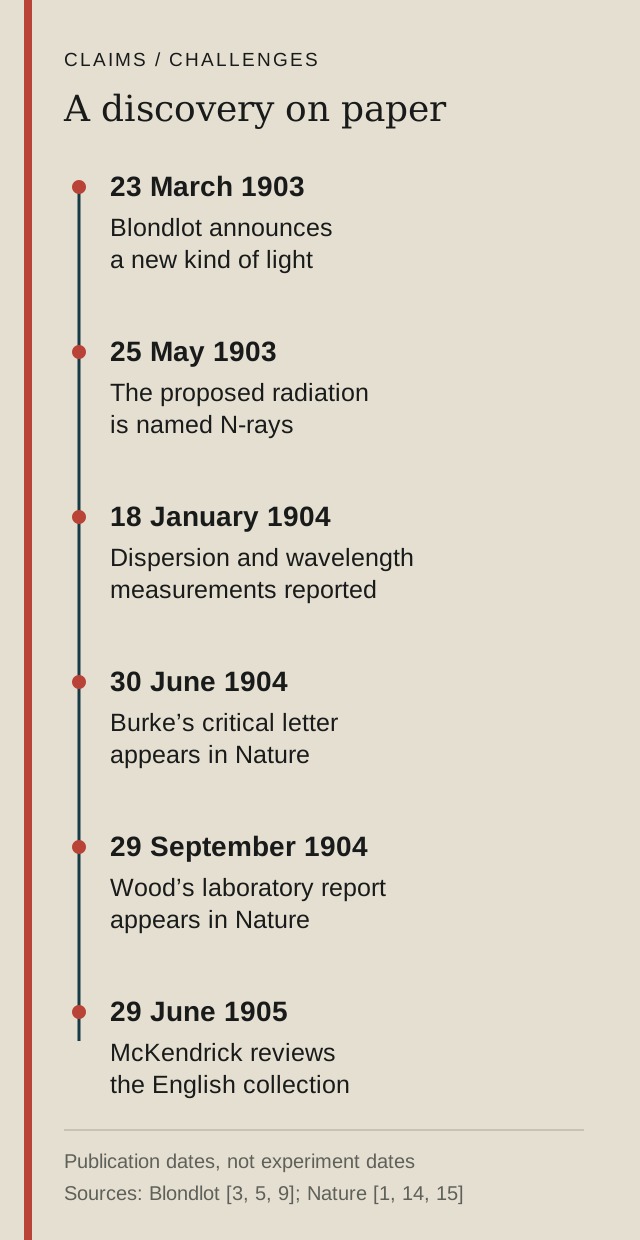
The historical sequence places limits on the familiar legend. The named radiation emerged through several communications in 1903, its proposed properties multiplied, and independent criticism developed before Wood's report appeared. The English book and the hostile review both belong to 1905. None of those dates requires an invented final confrontation in which everybody agreed that the matter was over. The sources preserve a drawn-out disagreement, alongside the particular experiment which gave later narrators their central scene.5141516
Johnston's account of light measurement provides one way to understand why the dispute reached beyond Nancy. The eye was an established means of comparing illumination, but efforts to stabilise light measurement were changing the relationship between human judgement and physical recording. N-rays belonged to that difficult boundary. Replacing a person with a photographic plate did not automatically remove choices about exposure and apparatus. The relevant improvement was a procedure which could make an error visible and independently testable.22
Piéron's opening treatment gave the supposed rays a different disciplinary home: psychology. That classification followed the failure to establish them as the proposed radiation. It should not be read as a diagnosis of everyone who took part, or as proof that one psychological mechanism has been measured retrospectively in each trial. A historian can identify evidence of expectation entering a procedure without knowing exactly what every observer consciously experienced while watching the screen.17
Nancy retains a less dramatic physical connection. The city's destination organisation describes Parc Blondlot near the railway station, on property passed to the municipality by the family. The park includes grounds on the site of the former house. It is a material legacy, separate from the experimental claims, and a reminder that the name did not survive only as shorthand for an error. No imagined visit or scene is needed to make that contrast.25
As of the sources checked on 7 November 2026, there is no verified recovery of Blondlot's radiation. Its proposed existence remains unsupported; uncertainty about the cause of every reported variation does not supply the missing confirmation. The old papers retain the measurements, the precautions and the confidence with which the discovery was described. The later experiments retain the reason that confidence could not make it survive.131521
Follow the evidence
Sources & further reading
- The n-Rays R. W. Wood · 1904-09-29 · Accessed 2026-11-07
- On the Polarization of X Rays R. Blondlot · 1903-02-02 · Accessed 2026-11-07
- On a New Species of Light R. Blondlot · 1903-03-23 · Accessed 2026-11-07
- On the Existence, in the Rays Emitted by an Auer Burner, of Radiations Which Traverse Metals, Wood, etc. R. Blondlot · 1903-05-11 · Accessed 2026-11-07
- On New Sources of Radiations and New Actions Produced by These Radiations R. Blondlot · 1903-05-25 · Accessed 2026-11-07
- On the Storing of N Rays by Certain Bodies R. Blondlot · 1903-11-09 · Accessed 2026-11-07
- On the Strengthening Action of a Beam of Light on the Eyes R. Blondlot · 1903-11-23 · Accessed 2026-11-07
- On New Actions Produced by N Rays; Generalization of Phenomena Already Observed R. Blondlot · 1903-11-02 · Accessed 2026-11-07
- On the Dispersion of N Rays and Their Wave-Length R. Blondlot · 1904-01-18 · Accessed 2026-11-07
- Registration by Photography of the Action Produced by N Rays on a Small Electric Spark R. Blondlot · 1904-02-22 · Accessed 2026-11-07
- On a New Species of N Rays R. Blondlot · 1904-02-29 · Accessed 2026-11-07
- On Peculiarities Presented by the Action of N Rays on a Dimly Lighted Surface R. Blondlot · 1904-02-02 · Accessed 2026-11-07
- An Investigation of N-Rays R. R. Ramsey and W. P. Haseman · 1904 · Accessed 2026-11-07
- The Blondlot n-Rays John Butler Burke · 1904-06-30 · Accessed 2026-11-07
- Review of Blondlot’s N Rays John G. McKendrick · 1905-06-29 · Accessed 2026-11-07
- Introduction by the Translator Julien Garcin · 1905 · Accessed 2026-11-07
- Grandeur et décadence des rayons N Henri Piéron · 1906 · Accessed 2026-11-07
- 1904: Robert Wood Debunks N-rays American Physical Society · 2007-08 · Accessed 2026-11-07
- Year 44 – 1904: Rayons N MIT Libraries · 2011-02-19 · Accessed 2026-11-07
- René Blondlot et les rayons N Jean-Michel Bloch · 1986 · Accessed 2026-11-07
- L’affaire des rayons N Pierre Potier / AFAS · 2025-04-28 · Accessed 2026-11-07
- A Notion or a Measure: The Quantification of Light to 1939 Sean François Johnston · 1994-11 · Accessed 2026-11-07
- The One-Dimensionality of Scientific Relativism János Laki · 2019 · Accessed 2026-11-07
- New Light on Old Rays: N Rays Robert T. Lagemann · 1977-03 · Accessed 2026-11-07
- Parc Blondlot Destination Nancy · undated · Accessed 2026-11-07
- Preliminary Notice to N Rays R. Blondlot · 1905 · Accessed 2026-11-07