On 1 December 1888, a newspaper contributor suggested that the Whitechapel murders were sacrifices arranged across London in the shape of a cross, setting out a theory that would eventually turn suspicion back towards its author.1
A motive in the mutilations
The argument offered something the investigation had failed to supply: a reason. Someone had killed women in the East End, cut their throats and, in several cases, inflicted extensive mutilations. To the contributor, those acts could be read together as the work of a black magician seeking materials for a ritual. The city’s streets had become an altar, and the missing explanation was supposedly waiting in a book.1
The writer is identified as Robert Donston Stephenson, also known as Roslyn D’Onston, a journalist with an interest in occult subjects. His contribution appeared under the confident description ‘One Who Thinks He Knows’. It proposed a French murderer, invoked the occult author Éliphas Lévi and claimed extraordinary precision in the positioning of the crimes. Later accounts would turn the reasoning around: perhaps a man who described such a scheme knew it from inside.122
That possibility gives Stephenson a peculiar place in the Ripper story. He left writings that can be examined, rather than merely a name discovered in a distant family anecdote. Yet being a contemporary theorist also gave him access to the same newspaper reports available to thousands of other readers. The task is to establish where his interpretation exceeded public knowledge, and whether anything connects that excess to a crime.
The familiar sequence comprises Mary Ann Nichols, killed on 31 August 1888; Annie Chapman, on 8 September; Elizabeth Stride and Catherine Eddowes, on 30 September; and Mary Jane Kelly, on 9 November. These are the five women generally grouped as the Ripper’s victims, although the boundaries of the series remain disputed. Calling them the ‘canonical five’ identifies a convention in the literature, rather than a verdict delivered against a known offender.219
Their circumstances matter more than the mythology usually allows. Whitechapel contained precarious work, overcrowded homes and lodging houses, and a large Jewish community exposed to hostile suspicion. The women had lives and relationships before they became names on a murder map. London Museum’s account stresses the danger of reducing them all to the same occupational label, a habit inherited from Victorian reporting and repeated long afterwards.2
An occult explanation has to account for evidence within that setting. Mutilation may suggest purposeful behaviour without identifying the purpose; a missing organ does not reveal what happened to it. Repeated violence can support a connection between crimes without specifying a religion, a lodge or a particular suspect. Stephenson’s proposal crossed those gaps with an unusually vivid argument, but its first step was considerably less secure than its assurance suggested.
One who thought he knew
Stephenson began with the chalk writing associated with the night Eddowes and Stride were killed. In his account, the inscription appeared above Eddowes’s body in Mitre Square. He treated it as the murderer’s calling card, then made the spelling of one word carry the weight of a national identification. It was a promising opening for a newspaper revelation: a clue the authorities had seen but supposedly failed to understand.1
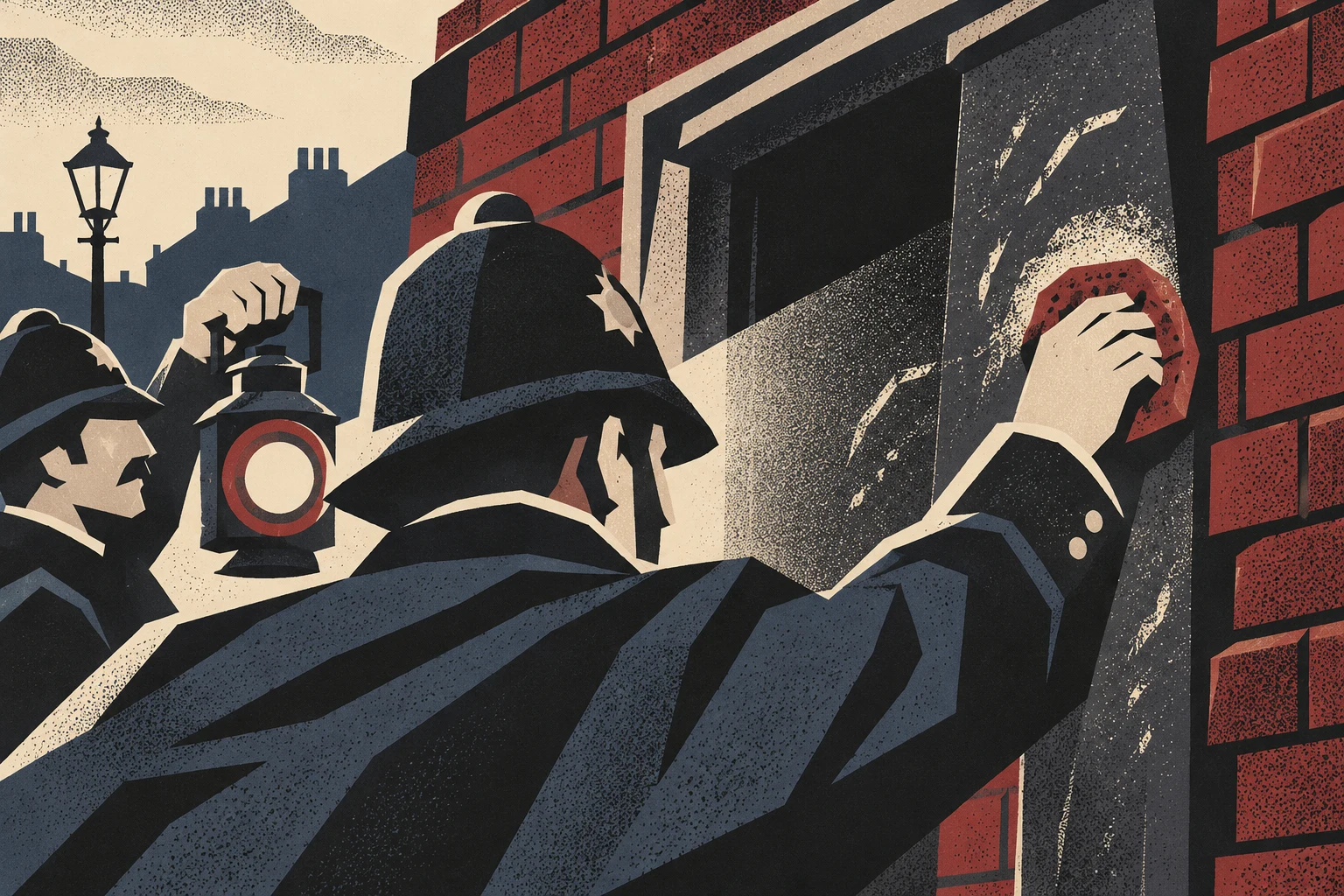
His location was wrong. The writing was in Goulston Street, where a piece of Eddowes’s apron had been found, rather than on a wall above her body in Mitre Square. Sir Charles Warren’s report places it on the jamb of an open doorway or archway. The distinction separates a murder scene from a possible trace along a subsequent route, and separates proximity from proof that the killer wrote the message.1323
The surviving versions of the wording differ, but Stephenson concentrated on ‘Juwes’. He argued that an English writer would not naturally produce that spelling, while a Jewish writer would know how to spell the name of his own people. A foreigner, he concluded, must have fallen back on a native language. These were assumptions about how whole populations wrote, presented as if they exhausted the possibilities.1
He then supplied a missing dot. What police had copied as ‘Juwes’ could, he proposed, have been ‘Juives’, the French feminine form referring to Jewish women. The grammatical difficulty did not trouble him. French speakers, he asserted, were careless about gender; their supposed habits, together with his reading of the sentence’s construction, identified a Frenchman. Nothing in the argument established that the unseen dot had ever existed.1
The procedure is revealing because the alteration produces the evidence it needs. A doubtful transcription becomes an imagined original, which becomes a nationality, which prepares the reader for a French occult book. At each stage, an inference is carried forward as a settled fact. The article’s certainty grows while the number of unverified steps beneath it increases.
Readers did not have to wait a century for an objection. A letter printed in the same newspaper on 6 December challenged the linguistic argument, rejecting the suggestion that French speakers would confuse the feminine and masculine nouns in this way. Its author, signing as ‘A Frenchman’, also mocked the proposed geometry: perhaps a different diagram could prove that a Unionist was drawing the Union Jack across the East End.4
The joke went directly to the method. Given enough freedom to add marks, choose connections and interpret a result, an investigator could discover the emblem he expected. The correspondent did not claim to know the murderer’s nationality. He argued that the newspaper’s proposed route to knowing it was unsound, a criticism aimed at the reasoning rather than at the mere strangeness of the conclusion.4
Even a mistaken article might contain an independent insight, so the error does not dispose of everything Stephenson wrote. It does, however, undermine the idea that his account is straightforward evidence of privileged access. Someone remembering his own crime would have to be explaining a false location; someone working from reports might simply have misunderstood them. Neither possibility can be selected merely because it makes the more dramatic story.
A recipe for terror
After nationality came motive. Stephenson directed readers towards Lévi’s ‘Dogme et Rituel de la Haute Magie’, proposing a connection between descriptions of black magic and the removal of body parts. His list included materials associated with death and desecration, culminating in a preparation supposedly requiring part of a woman’s body. That final requirement was the bridge he offered between a printed occult tradition and the Whitechapel mutilations.1
The argument had an immediate imaginative force. The organs were no longer inexplicable trophies or traces of an unknown compulsion: they had a destination and a use. A book could explain why a murderer took something away, while the map could explain why he killed where he did. Two different uncertainties were made to support one account, even though neither established the other.1
Stephenson acknowledged that Lévi condemned the dark practices he described. That qualification is easily lost in later retellings, where an occult author’s name can become shorthand for a practical murder manual. To examine the claim fairly, it helps to distinguish a writer describing or denouncing a practice, a reader believing in it, and a criminal demonstrably acting upon it. Those are three different kinds of evidence.
Lévi’s work does contain disturbing discussions of necromancy, sacrilege and materials taken from the dead. In Arthur Edward Waite’s 1896 English translation, he distinguishes evocation through prayer from darker practices involving blood and desecration, and advises against the latter. He also describes the destabilising effects of fear and imagination. This was a complicated occult philosophy, containing warnings and explanations as well as accounts of forbidden ceremonies.5
That translation appeared after the murders, so it cannot simply be substituted for the edition Stephenson consulted. Nor does reading its relevant passages verify every ingredient in his newspaper list. The exact organ requirement he asserted has not been established here from an inspected French edition. What can be checked directly is the claim he made in 1888; what remains unproved is the link between that claim, a particular reader and a particular killing.15
The idea circulated beyond the original newspaper. On 8 December, the spiritualist journal ‘Light’ discussed the article alongside John Francis Brewer’s ‘The Curse upon Mitre Square’. Its editorial repeated the proposed French connection and cross, while treating both accounts as signs of a remarkable phase of contemporary thought. It also repeated the error placing the inscription above the victim, showing how readily a detail could travel with the theory attached.6
Brewer’s supernatural tale supplied another kind of explanation: an old religious site, a curse and violence returning across the centuries. Placed beside the Gazette contribution, it shows how quickly the crimes acquired an imagined past. Neither publication provided an eyewitness to a Whitechapel ceremony. Their value is evidence of what contemporaries were making of the murders, including people already interested in supernatural questions.6
A later medical discussion illustrates the continuing uncertainty over removed organs. In a 2008 historical article, nephrologist Gunter Wolf considered the kidney sent to vigilance-committee chairman George Lusk, the disputed claims surrounding it and possible meanings attached to organ removal. The existence of a scholarly discussion does not authenticate the parcel as Eddowes’s kidney, or demonstrate a magical purpose; its interpretations still depend on an incomplete historical record.20
Stephenson’s strongest point was that mutilation deserved explanation. His weakest was treating the availability of a literary explanation as evidence that someone had followed it. A motive becomes more convincing when it predicts details independently confirmed by the investigation, or when objects, witnesses or reliable records connect an offender to it. A resemblance between a crime and something described in a book leaves those connections to be made.

Drawing blood on the map
The map supplied the theory’s grandest claim. According to the Gazette article, six murder sites formed a perfect cross: a line through four locations created its length, and a second line joined the two remaining sites. Stephenson described an exact arrangement and argued that it could not have arisen accidentally. The geometry seemed to transform isolated attacks into parts of a single deliberate design.1
His six were not the modern canonical five with an additional point casually attached. He explicitly left out the last killing, committed indoors in Dorset Street, which meant Mary Jane Kelly. He argued that its mutilations differed in anatomical skill from those of the preceding crimes. The exclusion was therefore defended as a judgment about the violence, but it also removed the site that did not fit his lines.1
There was another adjustment. The torso discovered at the new police buildings at Whitehall might, he suggested, belong to the same scheme, although it lay elsewhere. He proposed that the killing had occurred along the cross before the remains were moved. That supplied a way to discuss seven sacrifices without requiring the seventh discovery site to appear on the figure. The proposed original location was not a location he had demonstrated.1
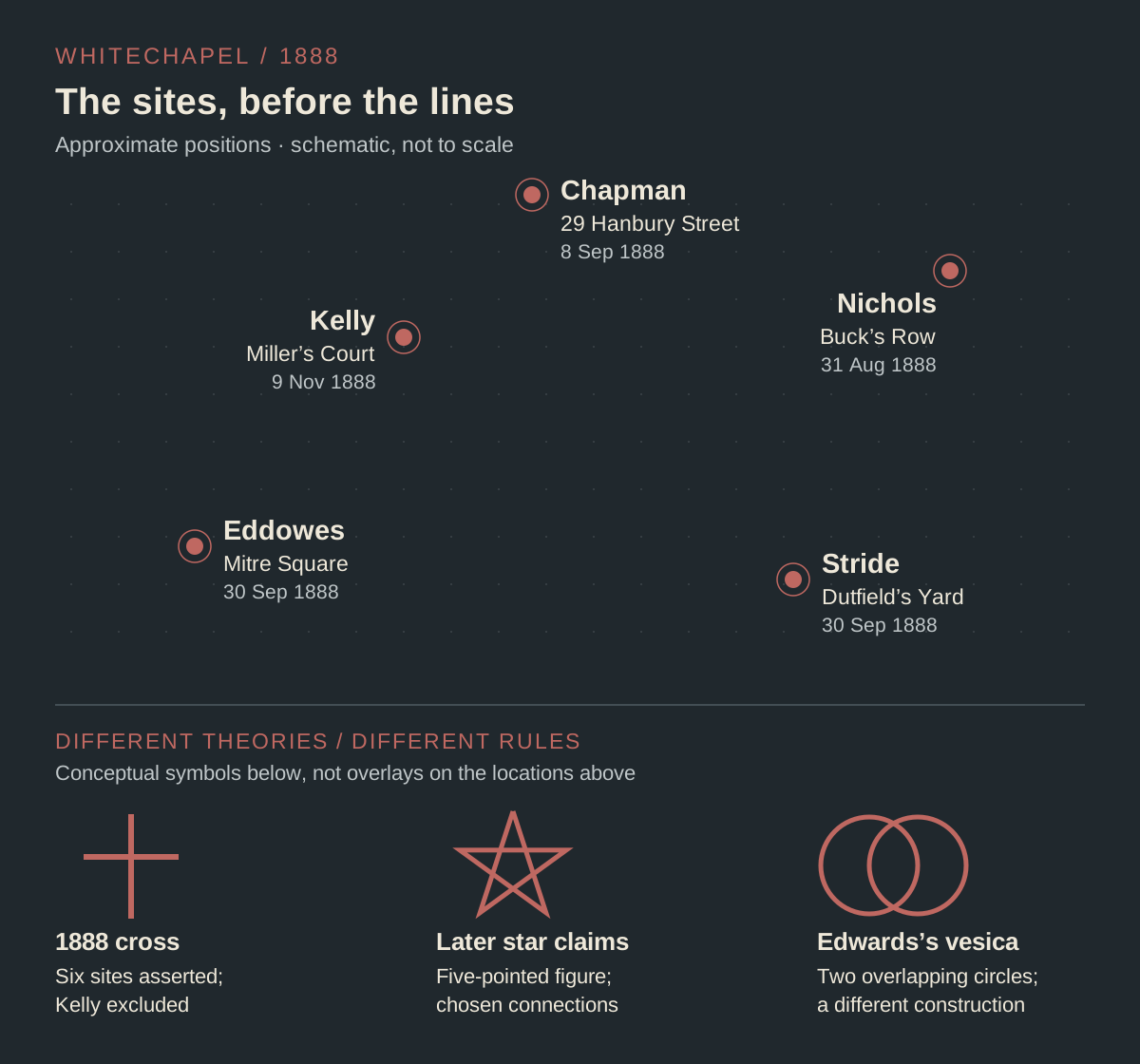
Ripper researcher Dan Norder identifies the earlier six-site sequence as including Emma Smith and Martha Tabram before Nichols, Chapman, Stride and Eddowes. His survey distinguishes that cross from later four-point versions, five-point stars and Ivor Edwards’s curved construction. The distinction matters: these figures depend on different selections and connections, rather than representing several independent discoveries of the same unmistakable sign.7
A pentagon is a five-sided outline; a pentagram is a five-pointed star. Those terms are often allowed to blur into a general impression of occult geometry. Neither follows automatically from the statement that five women were killed. Their sites must be plotted, an order of connection chosen and any departures from an expected shape acknowledged. Calling an irregular figure ritual does not explain why those particular irregularities should count as meaningful.
Norder also examines the pentagram familiar from Alan Moore and Eddie Campbell’s ‘From Hell’, noting problems with the depicted locations. That work is fiction, however carefully researched its background. Its powerful visual language cannot establish what an unidentified murderer planned in 1888. An image encountered repeatedly in a novel, film or online reconstruction can become familiar without gaining any additional evidential support.7
Edwards’s ‘Jack the Ripper’s Black Magic Rituals’, issued by Blake in 2002 after an earlier edition, argues for a ritual scheme and identifies Stephenson as its perpetrator. The design is associated with the ‘vesica piscis’, the lens-shaped overlap between two circles. It should not be reduced to the claim that five bodies made a regular pentagram; that would misstate the theory before assessing it.16
The difficulty concerns the rules for finding a pattern. Were the victims selected independently of the desired symbol? How much displacement is permitted? Why join these points rather than others, and what would make the proposal fail? Without answers fixed before looking at the result, a flexible construction can absorb inconvenient locations as exceptions. That makes it harder to distinguish a planned design from one produced by the investigator.
Geography still matters enormously. It can reveal access, familiarity, opportunities and routes, even when it reveals no occult emblem. The schematic below preserves the separation between the five commonly grouped sites without joining them into a purported ritual. A cross, star or overlapping pair of circles adds an interpretation to that distribution; the additional lines require evidence of intention that the distribution alone cannot supply.19
The brotherhood theory
Freemasonry offers a different hidden structure. Stephen Knight’s ‘Jack the Ripper: The Final Solution’ (1976) proposed that murders protected a royal secret and involved Sir William Gull and accomplices. Alleged echoes of Masonic penalties in the mutilations supplied a ritual dimension, while influential members of the fraternity supposedly explained how the truth could be concealed.8
The Goulston Street inscription acquired a different significance from Stephenson’s French reading. ‘Juwes’ was connected to figures in the Masonic story of Hiram Abiff, the murdered master builder. The disputed word could indicate either a foreign magician or a fraternity’s secret knowledge, depending on the interpretation applied to it.18
Masonic writer Dennis Stocks disputes the theory’s reliance on the Sickert family story and its ritual parallels. For example, he challenges a comparison involving entrails cast over a shoulder: the side described in the alleged penalty did not match the reported wounds. Stocks writes as a defender of the fraternity, but the discrepancy raises a concrete question about a supposedly identifying signature.8
Warren’s own report gives a contemporary explanation for the erasure. Superintendent Thomas Arnold had already arranged for an inspector to bring a sponge, because the writing might provoke disorder. Warren described arriving before daylight, finding Metropolitan and City police at the spot, and considering whether the words could remain long enough to be photographed. He decided they should be removed immediately, after a copy had been taken.3
He justified that decision by describing the expected Sunday crowds, hostility towards Jewish residents and the possibility that the building would be attacked. His report also referred to a subsequent warning from the Acting Chief Rabbi about dangerous claims concerning the spelling. Those details place the decision within a documented fear of antisemitic violence. They do not require a secret ritual vocabulary to make the risk intelligible.3
A senior official’s explanation is not immune from criticism. Destroying potentially useful evidence prevented later examination of the original lettering, and the surviving copies cannot restore everything a photograph might have recorded. Yet the evidential loss does not establish the proposed reason for it. To demonstrate a Masonic cover-up would require evidence connecting the erasure to knowledge of a conspiracy, beyond the fact that a conspiracy could benefit from it.
There is also a basic difference between the two occult narratives. A fraternity-directed killing to suppress blackmail has a political purpose, even if its perpetrators allegedly use ritual forms. A magician obtaining organs for an operation has another purpose. They can share symbols in later storytelling without corroborating each other. Treating Freemasonry, black magic and every unusual geometric figure as interchangeable removes the very distinctions an investigation needs.
A man of many mysteries
Stephenson’s own writing explains why he attracted attention without requiring him to have committed a murder. In 1896, W.T. Stead introduced an autobiographical contribution to ‘Borderland’ by saying he had once suspected its author of being Jack the Ripper for more than a year. Stead also claimed that police had arrested and released him, a later recollection that should not be mistaken for an independently inspected arrest record.9
The introduction contains a warning alongside the recommendation. Stead had known the contributor for years and considered him remarkable, but explicitly declined to vouch for the authenticity of his experiences. The author insisted on preserving incidental details because, he argued, they helped readers recognise eyewitness truth. The resulting piece invites belief through specificity while its editor carefully separates publication from verification.9
Writing as a pupil of Lord Lytton, Stephenson described an early fascination with mysticism, astrology, witchcraft and mesmerism. His supposed mentor was the novelist Edward Bulwer-Lytton, whose ‘Zanoni’ had excited his imagination. In the account, a literary influence becomes a personal initiation: the admired author appears first as an uncanny double, then guides the aspiring student towards a more secret encounter.9
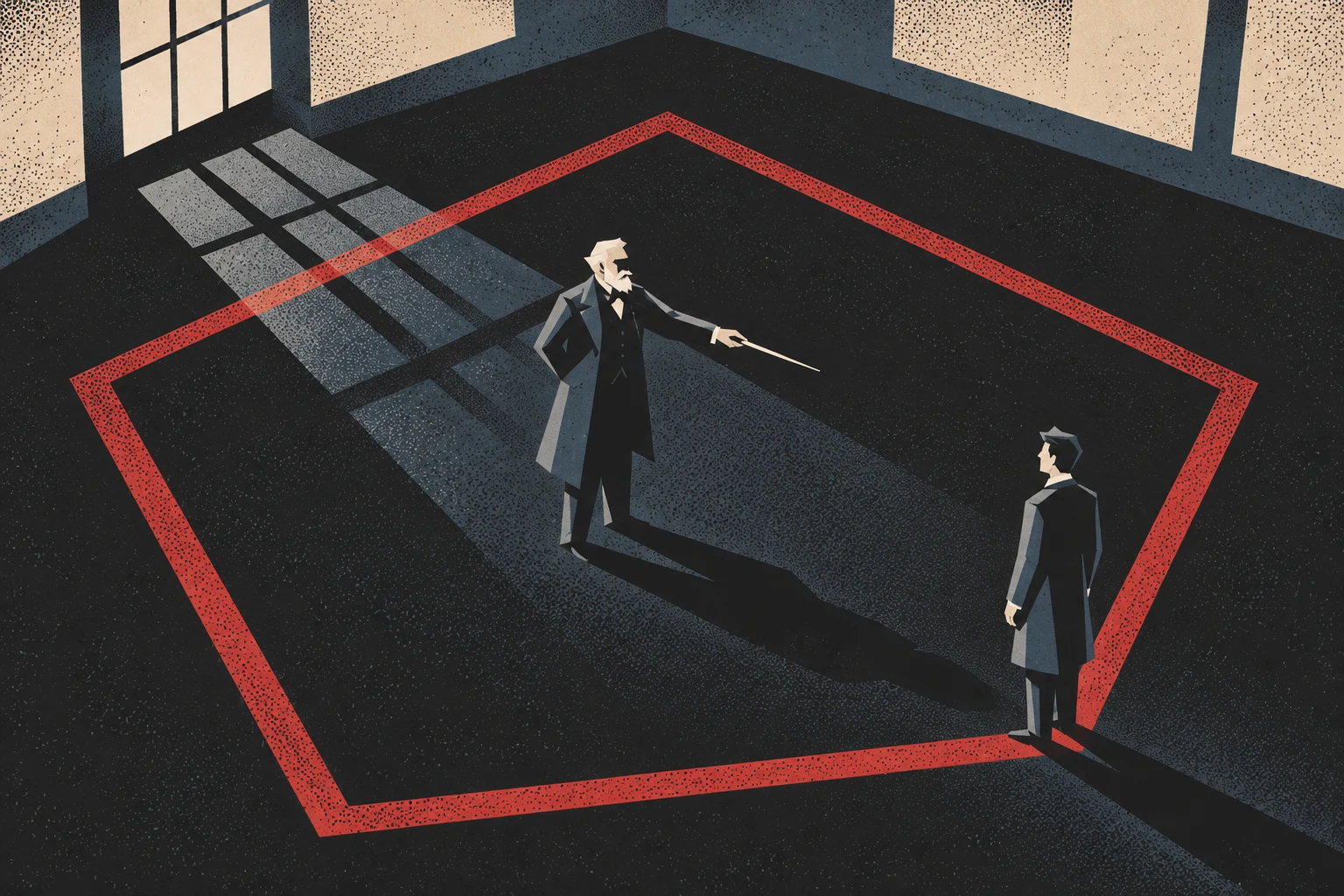
The scene is precise and theatrical. Lytton stands inside a pentagon drawn in red chalk, extending a wand towards his visitor, and administers oaths of obedience and secrecy associated with a Hermetic lodge of Alexandria. This is a claim Stephenson published about his own life. It establishes that he wrote about such imagery, but neither authenticates the initiation nor connects a lodge to the Whitechapel murders.9
His German adventures went further. One fellow student supposedly produced a double who could attend a ball while the original body remained elsewhere. Stephenson described handcuffing the apparently unconscious man, visiting the gathering and seeing him there, then returning to check the body. The narrative uses the trappings of an experiment to frame an extraordinary proposition, while leaving its crucial verification inside the narrator’s account.9
A subsequent episode involved exchanging bodies. Stephenson presented the experience through questions of identity, temptation and responsibility: which part of a person was accountable when mind and body appeared to pull in different directions? Such stories could make him fascinating or alarming company. They also gave later readers a reservoir of material from which to construct an image of someone capable of crossing ordinary moral boundaries.9
Another published story, ‘Dead or Alive’, described a compact with a former lover to meet on a bridge on the anniversary of their parting. The woman supposedly returned after her death and passed through his outstretched arms. Stephenson supplied remembered conversation, an attendant and subsequent inquiries as supports. They remain elements of his own testimony, not independently verified witnesses to an apparition.10
An earthly incident within that narrative can be checked more securely. Contemporary newspapers reported a serious shooting accident off Flamborough Head in 1868, when Stephenson was a customs officer. Mike Covell recovered accounts describing a gun discharged during a pleasure outing and assistance from another person with surgical knowledge. These reports support an injury and an occupation; they do not establish the later image of a medically trained master criminal.11
Reading the writings alongside the records produces a more interesting figure than either automatic belief or automatic dismissal allows. Stephenson knew how to tell stories that made the ordinary world seem porous to another one. That capacity helps explain his occult journalism and its reception. It also creates a practical problem for anyone using his self-description as a reliable inventory of qualifications, travels, powers or crimes.
From commentator to suspect
There was contemporary suspicion, rather than merely a modern name selected from a directory. George Marsh, who discussed the murders with Stephenson, reported his suspicions to Scotland Yard in December 1888. Stephenson, meanwhile, accused Dr Morgan Davies of the London Hospital. Inspector Thomas Roots took statements, and later accounts of the surviving record do not show a prosecution following from either man’s accusation.21
Christopher T. George draws attention to a revealing change in Stephenson’s position. The Gazette contribution excluded Kelly from the occult murderer’s series, whereas the later allegations against Davies brought her back into the account. The black-magic explanation was absent from that accusation. These are difficulties for the idea of one consistent disclosure of a plan, although an inconsistent amateur theory is not itself evidence of innocence or guilt.13
George also examined claims based on unusual capital letters in Stephenson’s October letter to City police. He argued that forms transcribed as capitals were ordinary features of the handwriting. The episode is a smaller version of the missing dot in ‘Juives’: an interpretation of a mark can become suspicious evidence if the underlying writing is not checked carefully enough. Similarity asserted in a transcript needs testing against the original.13
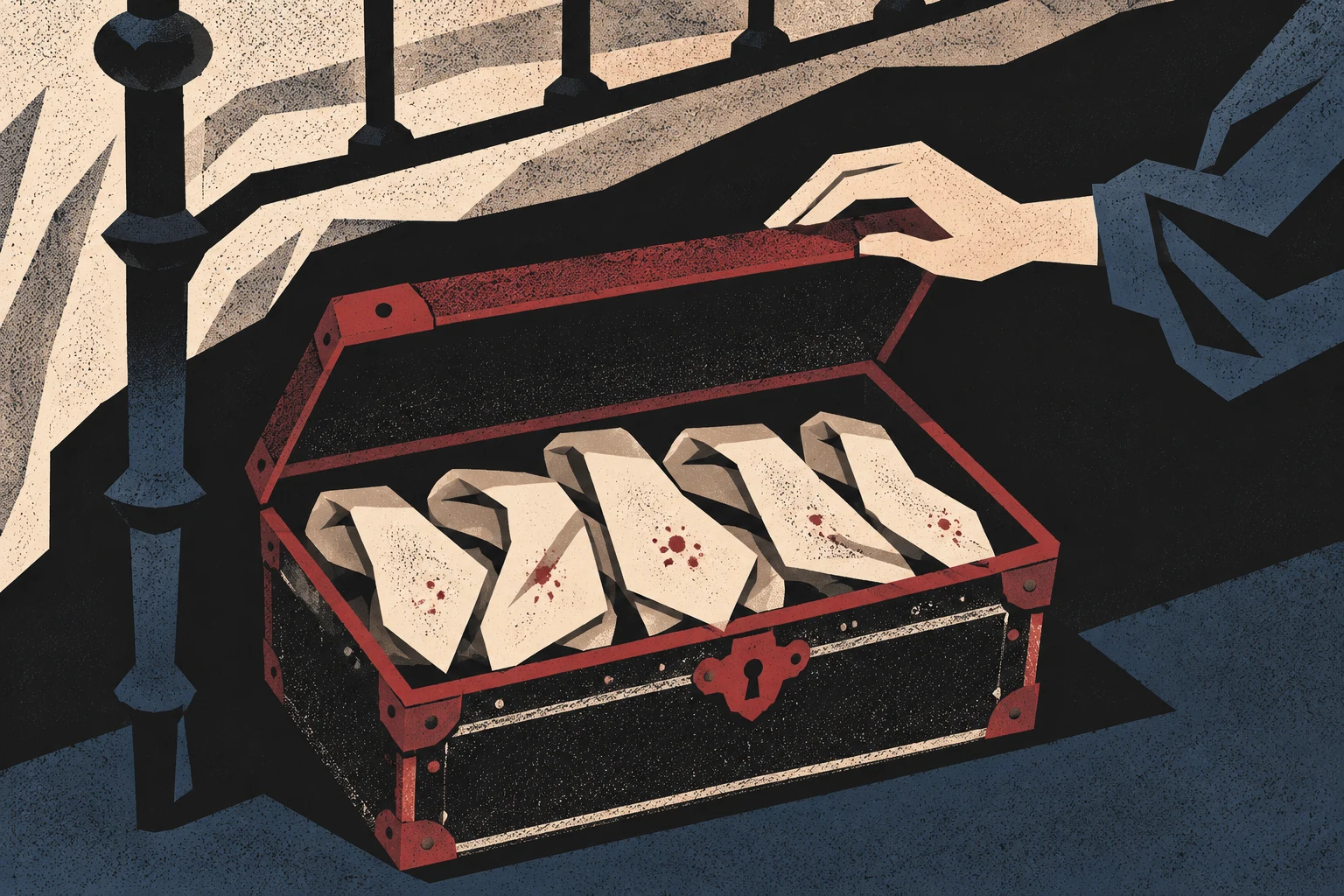
Later suspicion followed a more tangled route through occult acquaintances, remembered conversations and writers interested in the case. One of its most memorable images appears in Aleister Crowley’s retrospective essay: Vittoria Cremers opens a locked uniform case and discovers five bloodstained white dress ties. It is an effective ending to a sinister story, but the account supplies no preserved exhibits, laboratory results or documented connection between a tie and a victim.14
Crowley’s version also describes a five-pointed ritual figure, rather than faithfully reproducing the Gazette’s six-site cross. Its supposed household events are placed during the murders, conflicting with the hospital stay recorded for Stephenson. These problems make the essay evidence of an allegation’s development, rather than a dependable reconstruction of 1888. Crowley was writing long afterwards, not reporting an examination he had made at a crime scene.1412
The story’s later life was shaped by researchers who treated Stephenson seriously. Richard Whittington-Egan discussed him in 1975; Melvin Harris developed the case in books published in 1987, 1989 and 1994. Harris’s extensive work helped make the suspect available to a new generation of readers, including those attracted by a contemporary occult writer whose own interest in the murders could be turned into an accusation.15
Edwards took that suspicion into a more elaborate geometric argument. In public discussion he also proposed a practical explanation for transporting organs: they might have been cleaned at an alleged Leman Street hiding place, then concealed behind a tie for the return to hospital. This is an author’s hypothesis about how a crime might have been accomplished, not evidence that the hiding place or the journey existed.17
A chain of possibilities can sound increasingly substantial as each link acquires a detail. The suspect could leave; he could conceal something; a sinister object might explain a remembered remark. Yet adding a plausible mechanism does not document its use. The ties story needs evidence about the ties, the proposed refuge needs evidence about the refuge, and the suspected man needs a connection to the actual attacks.
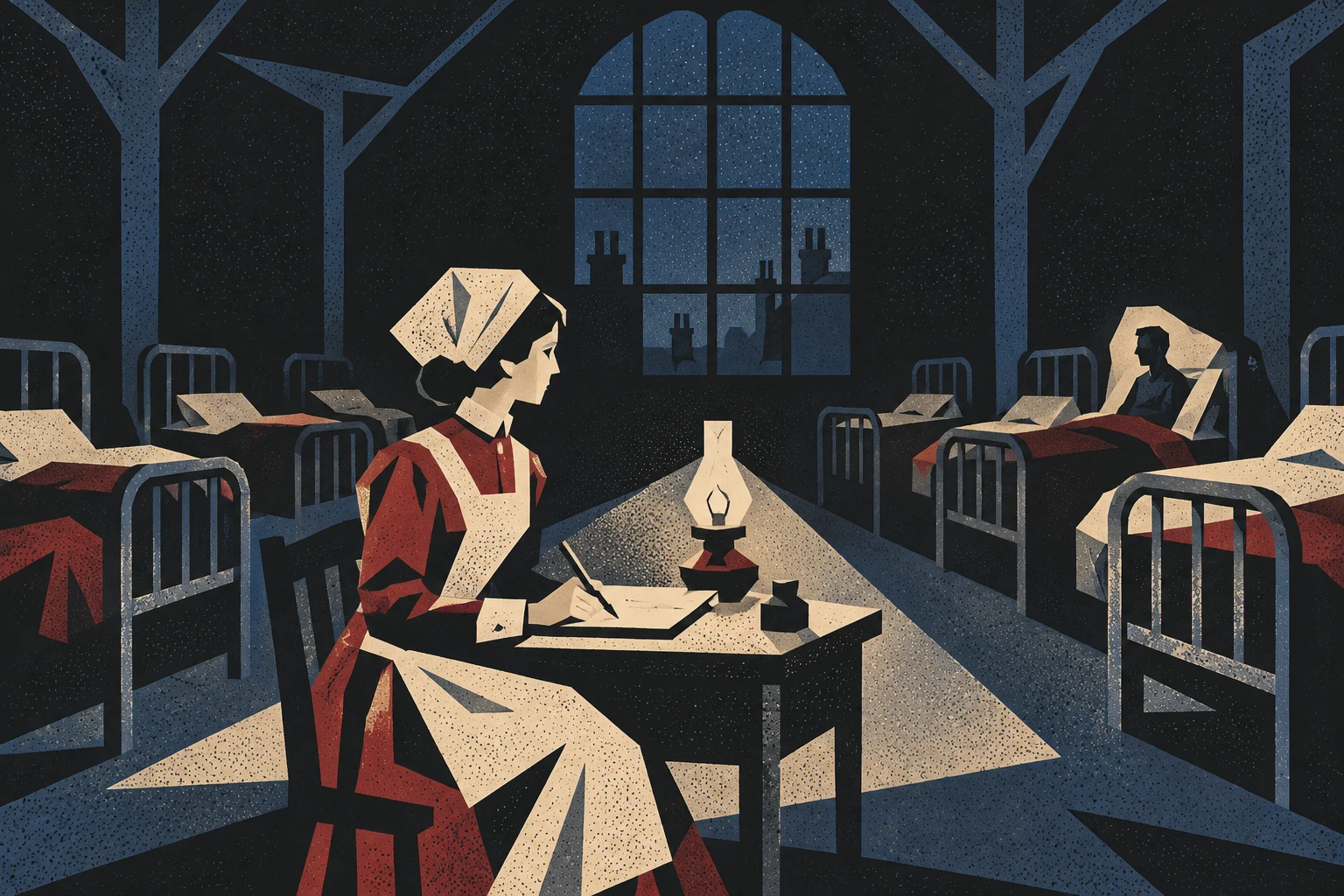
The hospital door
The least theatrical obstacle is also one of the most important. Stephenson was a patient at the London Hospital from 26 July to 7 December 1888, a stay covering the five commonly grouped murders. Supporters have interpreted a hospital bed as useful cover and questioned how incapacitating his diagnosed neurasthenia would have been. Neither the admission nor a historical diagnostic label establishes that he could roam the streets unnoticed.12
Later researchers brought the ward arrangements into the argument. Public discussions of work by Mike Covell and Spiro Dimolianis describe archival inquiries and advice from hospital curator Jonathan Evans concerning supervision and restrictions on patients leaving at night. Those findings challenge the picture of an institution through which Stephenson could simply come and go. The original complete night rosters have not been independently examined for this article, so an absolute, continuously witnessed alibi is not claimed.18
The burden nevertheless remains with the proposed movements. A reconstruction needs evidence that this patient could leave on the relevant nights, reach the sites, commit the attacks and return without the departures or their consequences attracting attention. Suggesting a reduction in staff or a weakness in security identifies something to investigate. It cannot substitute for a record of permission, an observed absence or a reliable account of evasion.
His presence nearby cuts both ways. It helps explain his interest in the murders, the conversations he reported and his access to a community discussing them. It also gave him an institutional setting whose routines can be investigated. Proximity makes him relevant to the history of the case; it does not decide which role he occupied within it.
The same discipline is needed with the newspaper article. Its errors and changing explanations weaken the claim that it encodes a coherent confession. They do not prove that its author was incapable of violence. Conversely, his knowledge of occult literature does not show that a murderer followed that literature, and an account of an initiation does not turn a red-chalk figure into a map of real victims.
What would change the assessment is evidence with an independent connection: a reliable contemporary observation placing Stephenson at an attack, authenticated material linking him to a victim, or a documented plan whose particulars preceded and matched the crimes. None of the occult arguments examined here supplies that connection. They organise selected details into a possible narrative, leaving the identification itself unproved.
The question of ritual motive remains distinct from the question of identity. An unknown killer might have held beliefs that never reached the police record, just as he might have acted for reasons very different from those proposed in print. The absence of a demonstrated occult motive cannot reveal the true one. It means that Freemasonry, black magic and geometric planning should remain attributed theories rather than explanations the evidence has established.
Stephenson’s lasting importance is clearer in another respect. Before the year of the murders had ended, he was already turning streets, mutilations and a disputed word into a hidden system. Others would keep changing the figure, the motive and the suspect. The women remained at the same addresses, while the lines drawn between them multiplied.
Follow the evidence
Sources & further reading
- The Whitechapel Demon’s Nationality: and Why He Committed the Murders One Who Thinks He Knows, attributed to Roslyn D’Onston · 1888-12-01 · Accessed 2026-11-07
- Jack the Ripper London Museum · Accessed 2026-11-07
- Report on the erasure of the Goulston Street writing Sir Charles Warren · 1888-11-06 · Accessed 2026-11-07
- Is Jack the Ripper Frenchman? A Frenchman, Pall Mall Gazette correspondent · 1888-12-06 · Accessed 2026-11-07
- Transcendental Magic: Its Doctrine and Ritual Éliphas Lévi, translated by Arthur Edward Waite · 1896 · Accessed 2026-11-07
- Occult Explanations of the Whitechapel Murders LIGHT editorial, edited by M.A. (Oxon) · 1888-12-08 · Accessed 2026-11-07
- Connecting the Dots: Were the Ripper Crime Scenes Chosen to Form a Pattern? Dan Norder · Accessed 2026-11-07
- Freemasonry and the Ripper Dennis Stocks · Accessed 2026-11-07
- A Modern Magician: An Autobiography Roslyn D’Onston, with introduction by W.T. Stead · 1896-04 · Accessed 2026-11-07
- Dead or Alive Roslyn D’Onston · 1892 · Accessed 2026-11-07
- D’Onston Stephenson: Dissecting the incident off Flamborough Head Mike Covell · 2008-03 · Accessed 2026-11-07
- Robert D’Onston Stephenson: A Jack the Ripper Suspect Jennifer D. Pegg · Accessed 2026-11-07
- Letter from the Sickbed: Donston Writes to the Police Christopher T. George · 1999-08 · Accessed 2026-11-07
- Jack the Ripper Aleister Crowley · Accessed 2026-11-07
- Melvin Harris (1930–2004) Stewart P. Evans · 2004 · Accessed 2026-11-07
- Jack the Ripper’s Black Magic Rituals: review and editions Casebook: Jack the Ripper · Accessed 2026-11-07
- Public discussion of D’Onston and organ concealment Ivor Edwards · 2002-04-25 · Accessed 2026-11-07
- Discussion of London Hospital research Howard Brown and Spiro Dimolianis, Casebook public forum · 2011-09 · Accessed 2026-11-07
- 1894 Ordnance map of Whitechapel Division and murder-site details Ordnance Survey; digitised map supplied by Robert House, hosted by Casebook · 1894 · Accessed 2026-11-07
- A kidney from hell? A nephrological view of the Whitechapel murders in 1888 Gunter Wolf · 2008-04-11 · Accessed 2026-11-07
- D’Onston’s Police File: chronology and archival references Spiro Dimolianis and public forum contributors · 2008-02 · Accessed 2026-11-07
- Crowley’s Ripper: The Collected Writings of Roslyn D’Onston Jarett Kobek, editor · 2005 · Accessed 2026-11-07
- Police Constable Alfred Long and his inquest evidence Casebook: Jack the Ripper · Accessed 2026-11-07